Tuesday, November 25, 2025

How to Handle a Toddler's Bathtime Rebellion

How to Handle a Toddler's Bathtime Rebellion

Understanding the Toddler's Resistance to Bath Time

Bathtime, bathtime is so fun, bathtime is for everyone. That is, until your toddler decides that it isn't — and she's never getting in the tub again. Protesting everyday parts of your regular routine is par for the course for your little one these days as she flexes her independence muscle again (and again, and again). It's also not uncommon for a tot to have bathtime snafus that leave her suds-shy, like slipping and falling or getting water in her nose.

"My little started refusing bathtime last week, putting up a crazy fight," says What to Expect Community parent OhamM22. "Full-on meltdown and tantrums. Doesn’t want bubbles. Her toys. Just does not want to get in. Even tells me to change her diaper (which she hates) so she can be clean but not get in the bath."

Despite her shifty stance though, she still needs to get clean. Here's what you can do to bring her back on board, plus how long your toddler's anti-bath phase will likely last.

Why Do Toddlers Hate Baths?

Many tots relish their nightly splashfests. That said, it's pretty common for your little bather to suddenly decide she's straight-up done with baths (much like she did with her former favorite snack or once beloved blue shoes). The most likely reasons why:

  • She just wants to call the shots. Your toddler's go-to way to let you know she's in control: refusing to do things she's readily done (and even liked) before.
  • She had an unpleasant experience. It's common for your sweetie to resist baths if she hit her head on the faucet last week or balk after she got bubbles in her eyes. She might even be bath-wary from another negative water experience in the pool or at the beach.
  • She's scared. Toddlers get frightened by a loud vacuum, an overenthusiastic dog, or even Santa. So it's definitely possible that your cutie has developed a fear of the tub, like going down the drain with the bathwater.

When Do Toddlers Grow Out of Their Fear of Baths?

Much like that sudsy bubble mountain, your munchkin's tub terror will fizzle out before long. Many of the situations that spook her now will become a nonissue as she grows into a more mature preschooler, who's capable of thinking a little more rationally. That said, you won't have to wait months (or years) before you're able to give your little one another bath. (Pee-eew!) Some gentle reassurance should help desensitize her — and make her more willing to take a regular dip.

What to Do When Your Toddler Refuses to Take a Bath

Good news: You don't actually need to do battle every night when your toddler is in a no-bath phase. It's perfectly fine to limit baths to two to three times per week, as long as she's not visibly dirty, sweaty, or sticky. (And if she's got dry skin, fewer soaks will actually do her good.)

When it is time for the tub, these tips can help get your munchkin more on board with the bath:

  • Let her move. If you haven't already, ditch the safety seat (but make sure the tub bottom is slip-proof). Being able to splash around more freely may wash away her resistance.
  • Go for the gear. Tub toys rock, so supply her with nonirritating soap crayons and bubbles, as well as plastic cups, stick-to-the-wall letters and animals, and a couple of rubber ducks (who can resist?). Be sure to rotate the assortment every month or two.
  • Switch up the timing. The novelty of a bath before dinner instead of after, for example, may seem totally fascinating to a tot. Up your enthusiasm ("Who wants a bath at a special time?!"), and she just might match your excitement with some of her own.
  • Enlist a bath mate. That could be you — with or without your swimsuit! You might also wrangle your partner or an older sibling for a soak á deux. Just remember, when showering or bathing together, keep the water temperature warm (not hot) for the sake of her sensitive skin.
  • Try pretend play. Invite your tot to use her imagination to turn the tub into a pirate ship that sails the high seas, or a fishing boat trawling for her next catch. If she needs some encouragement, try reading a water-themed tale tub-side.
  • Invite someone else to do the job. If you have a frequent sitter or caregiver who comes over, try saving the bath for them to tackle (at least temporarily). Even though your toddler may push the sudsy limits with you, she might be perfectly happy to go with the flow for someone else.
  • Keep it short and sweet. Your sweetie can go a couple days without a bath. But if her refusal isn't easing up, at some point, you'll still have to bathe her. So get the job done as fast as you can and move on to another activity to divert your toddler's attention. And even though it might be tough, try to keep your cool. Losing it won't make things easier.

What to Do When Your Toddler Won't Sit in the Bath

Got a stander on your hands? A tot who's content to set foot in the tub but won't keep her bum firmly planted is a serious slip-and-fall hazard. A few helpful strategies for getting her clean while keeping her safe:

  • Add a nonslip mat. A rubber mat will give your active bather a little more traction when she decides to pop up, reducing her risk of slipping.
  • Turn it into a game. How long can your cutie stay on her butt for? When you turn sitting down into a challenge, she might be more prone to stay put.
  • Consider a shower. If she wants to stay standing, the shower's the place to do it. Hop in with her or stay stationed by the shower door — your choice.
  • Offer a warning, then take her out. If a shower's not an option, lay out the no-standing rule for your toddler and give her one or two warnings. Let her know that if she breezes past them, tub time is automatically over — and follow through with the consequence.

What to Do When Your Toddler Has a Sudden Fear of the Bath

Your toddler's tub phobia might seem completely irrational. But it's real to her, so recognize that and help her feel supported. Chances are a little TLC is just what she needs to get on board with the bath again. Some tips:

  • Talk it out. If a boo-boo in the bath or another specific incident sparked the scaries, discuss what happened. Let your toddler know you understand how she feels ("I'd be scared too if I hurt myself, Honey"), and offer reassurances ("We'll make sure your eyes are closed when we wash your hair").
  • Take baby steps. Slowly desensitize your toddler to bathtime. If she balks at getting into a tub full of water, start by having her sit in an empty bath with her clothes on. Then fill it with just a few inches and sponge her clean. Once she's okay with that, you can try adding a little more water at the next bath, and so on.
  • Praise her efforts. Give your cutie a confidence boost by acknowledging her progress. Tell her how proud you are that she sat in the tub (even if it was barely filled), cheer her on, or even offer her a small reward like a sticker or stamp.
  • Don't ignore it or force your toddler to get in the bath. You'll only end up making the situation worse — and maybe even spawn a bigger fear (like a fear of water in general).

It can be frustrating when your toddler decides that baths just aren't her thing anymore. But chances are she'll bounce back to Team Tub soon enough. In the meantime, try to be patient, and maybe plan a relaxing bath for yourself after she's off to bed.


Why Toddlers Refuse Food — and How to Respond

Why Toddlers Refuse Food — and How to Respond

Your toddler won’t eat? You’re certainly not alone. Many a parent scratches their head when their former champion eater suddenly decides to turn her nose up at the dinner (and lunch!) menus. Truth: You could be dealing with a food strike, which occurs when your little one used to have a steady appetite, but now refuses to eat much of anything, including her favorite foods.

“My little one is 18 months and the last week he has been on a food strike,” says What to Expect Community user lovebeingamomma888. “Won’t eat anything. Sometimes only eats one meal a day and it’s usually not much. He won’t even eat his favorite foods.”

Frustration is normal when you’re faced with a food strike, but know that most of the time when toddlers won’t eat, it’s pretty normal. Here’s more about why toddlers refuse to eat, what to do when it happens at your house and, if something seems amiss, when to call the doctor.

Why is my toddler refusing to eat?

There are several reasons why your toddler may be on strike when it comes to meals and snacks, including her budding independence and a need for fewer calories too. Here’s the scoop:

  • She’s super busy
    Toddlers love to run, play, and explore — and with so many other exciting things to do, she’s probably not keen to take time out to eat. The bottom line: Her eating may be erratic now.

  • … and willful
    Her budding assertiveness means you can serve her, but she’ll decide whether to eat.

  • Toddlers are famous for pickiness
    Selective eating, food strikes and more are just a few of the phases you can look forward to your child going through. (Let's see, there's the "only beige food" phase, the "no foods that touch each other" phase, the "one food only" phase, just to name a few.) "My son use to be a good eater but lately just eats a few bites," says What to Expect Community user jaslyneh. "He does love to eat a lot of fruit, cheese, and Cheerios."

  • A little is all it takes
    Don’t forget the "one meal a day" phase, which is normal too. In fact, toddlers actually need less to eat than you think (those tiny tummies fill up fast), and they probably eat more than you know. (A handful of Cheerios here and a few cubes of cantaloupe there add up!) The bottom line: If your child is thriving, she's probably getting what she needs each day.

  • It could be the liquids
    Too many calories from milk or juice can definitely keep a toddler's tender appetite satisfied, leaving less room for the chicken stew you spent so much time preparing.

  • Or the snacks
    If your toddler has lots of opportunities to graze between meals, that can have its effect come dinnertime.

  • She may be teething
    Finally, find out if she's teething. Molars, which usually make a painful entrance between 13 and 19 months, can also stand in the way of a toddler and her interest in food.

What to do if your child refuses to eat

Keep a cool head if your toddler won’t eat and then try a few of these smart strategies:

  • Go with the flow
    Toddlers usually need to give food a full examination (touching, mashing, sniffing) before tasting. Just be matter-of-fact about this picky process and mealtime won’t become mayhem.

  • Start small
    Sometimes size matters. A mountain of food can overwhelm a little eater — causing her to give up before she's started. Keeping portions small will make it easier for her to navigate the plate.

  • Come back with combos
    Some toddlers reject new foods because they're not bland enough. In that case, try adding a little bit of the new, more flavorful food to a blander one (for instance, add a touch of peas to her brown rice). And just so you know: Almost all kids outgrow ultra-sensitive palates.

  • Make some dip
    Toddlers love to dunk their foods into gooey dips so consider serving guacamole with her red pepper strips, hummus, and bits of pita bread or a white bean dip for pieces of chicken.

  • Offer choices
    Serve up two healthy options on the dinner plate and let her choose her destiny.

  • Keep up your routine
    Stick to your regular meal- and snack-times, rather than offering food around the clock with the hope that you’ll entice your tot to open her mouth.

  • Switch gears
    Sometimes even favorite foods suddenly get the ick treatment. If it happens, try serving it differently, or preparing it hot instead of cold, dry instead of with milk, as a finger food instead of spoon-fed, or with cheese instead of plain. These tweaks may prompt her to gobble it up!

  • Fork it over
    Boost your toddler's budding independence and fine motor skills by giving her kid-size utensils. You might find that the novelty of feeding herself outweighs her impulse to reject her meal.

  • Try family style
    Eating as a family may encourage your toddler to join in. Pass around a bowl of pasta with veggies and pesto or teriyaki salmon and brown rice, and your tot just might reach for a taste.

  • Shop and cook together
    Hit the grocery store or farmer’s market and let your little one choose the fruit or veggies for lunch. And if she’s old enough, have her tear lettuce or stir muffin batter.

  • Give it a break
    Simply take the rejected food away, and don't serve it for a while (unless it's asked for). In the meantime, offer nutritionally similar foods — if it's frozen waffles that have gotten the cold shoulder, serve pancakes. If it's yogurt, try cottage cheese. If it's apples, try bananas.

  • Do bring it back with a twist
    When you return the rejected food to the menu, serve it with a different spin. Cereal for lunch instead of for breakfast. A peanut butter and jelly sandwich rolled up and cut into pinwheels instead of standard squares. Grilled cheese made with mozzarella instead of American.

  • Don’t write off rejected foods
    What's off the menu today may be back on tomorrow, so don't give up. In fact, if a food strike is triggered by teething discomfort or a soon-to-appear cold, it may be back in favor once your little one is feeling like her usual self.

  • Don’t rely on junk food
    It’s tempting to make only your kid’s favs or ply her with ice cream with the goal of getting her to eat something — anything — but this isn’t wise. Signing up to be a short order cook will allow the picky eating to continue and giving junk food regularly isn’t healthy. While you can't — and shouldn't — force your child to eat, you can make sure her plate is nutritious and nourishing.

  • Try not to worry
    Your toddler's refusal to eat is usually temporary. As long as your child continues to gain weight and inches and remains healthy (aside from the usual colds) — and as long as her weekly total intake seems sufficient (don't look at each day in a vacuum) — there's little reason for concern.

  • Don’t take it personally
    Just because your child rejects the food in front of her doesn't mean she's rejecting you. It's also not a reflection of your parenting (or cooking!) skills.

  • Nix bargaining or bribing
    Promising extra cookies every time your tot deigns to swallow broccoli could serve to increase her craving for sweets even more.

  • Change her seating — and keep it pleasant
    Has your toddler outgrown the high chair? She may be more willing to sit down for a meal if she doesn't feel confined, so consider a booster seat instead. And keep the scene low-key, quiet and free of distractions (like the TV or siblings playing nearby).

Is it normal if my child refuses to eat?

Yes, it’s normal for a child’s appetite to slump after age 1. In fact, a decreased appetite is to be expected at this stage of development. Your child is experiencing a normal slowdown in growth from her first baby year — and with it a need for fewer calories and food.

And keep in mind that it’s the rare toddler who loves everything at first bite. It often takes five, 10, even 15 attempts before your budding gourmand accepts (and swallows) a new food. If you’re concerned there’s just not enough getting inside her little mouth, you might keep a food log. Jot down everything she eats over the course of a week and then discuss it with the pediatrician.

When to call the doctor

If a closer examination of your toddler’s eating habits reveals an increasingly narrow diet, or one that’s missing a food group, talk with your child’s doctor to see whether giving her a daily vitamin-mineral supplement made for toddlers is a good idea. But you should definitely consult with the pediatrician right away if you notice any of the following symptoms:

  • Unusual weakness, lethargy or fatigue
  • Fever
  • Prolonged irritability
  • Weight loss

Your toddler’s eating habits can feel like you’re riding a roller coaster some days! But as long as your tot is eating well enough over the course of a week and you’re offering healthy choices, she should be fine. And as with many stages of childhood, know that this too shall pass.

Friday, November 7, 2025

Ben and Candy Carson's Struggle for Families

Ben and Candy Carson's Struggle for Families

A Lasting Partnership

Dr. Ben Carson, a renowned neurosurgeon, former Republican presidential candidate, and former U.S. Housing and Urban Development secretary, is known for his strong public presence. However, those who follow his social media accounts will notice that he is not alone in sharing the spotlight. His wife, Candy Carson, plays an equally significant role in their public life. She is credited on the cover of many of his books and has been a constant presence in his career. The Carsons have built a partnership that extends beyond personal life into professional endeavors, making it difficult to find a public-facing platform where they are apart.

This close collaboration is by design. The Carsons, who will be honored by the Sutherland Institute at its 30th anniversary awards dinner, are recognized as prominent advocates for the American family. Their work, particularly in the 2024 book "The Perilous Fight," highlights their commitment to defending the family as a core institution. The Sutherland Institute’s decision to present the Family Values Award to both Dr. and Candy Carson together reflects the deep connection between their lives and work.

Rick Larsen, president and CEO of the Sutherland Institute, explained that while the award was initially considered for Dr. Carson alone, the team realized how integral Candy Carson is to their message. “When you read their book and Candy’s book, ‘A Doctor in the House,’ you realize they’re inseparable,” Larsen said. “They’re in this together.”

A Half-Century of Partnership

Dr. Carson and Candy have been married for 50 years, and their relationship has evolved over time. In the early days of his medical career, Dr. Carson was incredibly busy as a pediatric neurosurgeon. When he became director of pediatric neurosurgery at Johns Hopkins, the division was not well-known. He spent years working to elevate its reputation, which eventually led to it being named the No. 1 pediatric neurosurgery division by U.S. News and World Report in 2008.

During this time, Candy focused on raising their children. Despite having an advanced degree from Yale and an MBA, she put her career on hold to care for their family. At the same time, she was also starting the Carsons Scholars Program, which provides college scholarships to students who excel academically and serve their communities.

Defending Family and Faith

In today’s political climate, discussing families and communities of faith can be controversial. The Sutherland Institute has long defended these institutions based on data and historical evidence. “Data shows that intact families in communities of faith tend to thrive,” Larsen said. “We’re completely aligned with Dr. Carson and Candy Carson’s new book where they make these points.”

The Carsons argue that the American family is under attack from various forces, including modern-day Marxists, socialists, and globalists. They reference W. Cleon Skousen’s 1958 book “The Naked Communist,” which outlines strategies aimed at undermining traditional values. These include discrediting the family and encouraging promiscuity and easy divorce.

The Perilous Fight

The title of the Carsons’ book, "The Perilous Fight," is inspired by a line from "The Star-Spangled Banner." They use this metaphor to describe the ongoing challenges facing the American family. Like Fort McHenry during the War of 1812, the family is under sustained attack, with enemies chipping away at its foundation for decades.

For Dr. Carson, the importance of a strong, two-parent family stems from his own childhood. His father left when he was young, and his mother worked multiple jobs to support her sons. Despite having only a grade-school education, she instilled a love of learning in her children. One of the most poignant stories involves her requiring her sons to write book reports every week, even though she could not read them herself.

Education as a Solution

Dr. Carson believes that education is key to addressing many of the challenges facing society. He argues that ignorance is a major issue, citing examples of people who lack basic knowledge. “We have to fight that,” he said. “We have to educate people so they understand the values that have made this nation prosperous.”

Through the American Cornerstone Institute, the Carsons are working to promote conservative principles and policy solutions. Their Young Patriots program aims to teach children to value faith, liberty, community, and life. “We have a wonderful story to tell with this nation,” Dr. Carson said. “It has a moral base, and as we allow all of that to recede, we’re suffering the consequences.”

Foods Needed During SNAP Freeze — Safe Donation Guide

Foods Needed During SNAP Freeze — Safe Donation Guide

The Crisis of Food Insecurity Amid Government Shutdown

Amid the uncertainty surrounding a government shutdown and the ongoing debate over whether Supplemental Nutrition Assistance Program (SNAP) benefits will be released to nearly 42 million Americans, food banks and giving networks across the country are working tirelessly to meet the growing demand in their communities. This situation has placed many food banks in what is being called "crisis mode," as families who rely on SNAP benefits face an uncertain future.

Jason Jakubowski, President and CEO of Connecticut Foodshare, explained that the uncertainty around SNAP benefits combined with the approaching holiday season has created a "nightmare scenario" for families. He noted that people who depend on SNAP don’t know when or if their full benefits will arrive, which has led to a surge in demand at food pantries and mobile food distribution sites. “For every one meal we can provide at the food bank, SNAP can provide nine,” he said.

With increased demand, there is also a growing number of individuals looking to help. Operation Food Search in St. Louis reported that a recent food drive with City Foundry saw 20,000 pounds of food donated—enough to feed 5,000 people in a day. However, in triage situations, it can be difficult for those new to food rescue and donation to understand how they can make the most effective impact.

Experts in food donation and safety provided guidance on how to ensure donations are as helpful as possible. Before making any donations, reaching out to the specific organization you're interested in supporting is a key step. This helps avoid well-intentioned but potentially unnecessary donations that may not align with the needs of the community.

“Before making a donation, the most helpful thing donors can do is check the guidelines of the organization they’re donating to,” said Kyle Waide, president and CEO of Atlanta Community Food Bank. “Food banks, pantries, and community fridges often have different storage capacities, safety requirements, and community needs.”

Jakubowski echoed this advice, noting that “a quick phone call can make your gift more impactful” and prevent donations from going to waste. He emphasized that each pantry serves a different community with unique needs and storage capacities, so checking in first ensures that donations go where they are needed most.

In addition to food donations, monetary contributions and volunteering are also valuable ways to support these networks. “We need donations to help us purchase food and transport it to our pantries and mobile sites. We need volunteers to help sort through donated food before it goes out on our mobile trucks,” Jakubowski said.

What to Donate: Tips from Experts

When choosing what to donate, experts recommend considering what you would feed your own family. Melissa Weissler of Operation Food Search advised, “Think about what you and your family enjoy eating, and let that be your guide.” She noted that food banks and pantries serve a wide variety of personal and cultural preferences, and it's important to be sensitive to these differences.

Kyle Waide added that donors should choose items that are nutritious, shelf-stable, and easy to prepare. He also stressed the importance of ensuring that items are unopened, in good condition, and within their expiration period.

Some of the most commonly requested items include:

  • Peanut butter
  • Canned meats (tuna, chicken, etc.)
  • Canned vegetables and fruits
  • Rice, beans, and pasta
  • Cereal
  • Shelf-stable instant meals
  • Shelf-stable milk
  • Granola bars
  • Fruit cups and applesauce
  • Crackers
  • Soups, stews, and broths

Jakubowski noted that protein-rich foods and dairy products are among the most sought-after items. However, he also mentioned that under-donated items like meat proteins can vary depending on the community’s needs. Calling ahead to check on under-donated items is a great way to build a relationship with your local food pantry.

Common Mistakes to Avoid

There are several common mistakes that donors can avoid by reaching out before donating. Wagner highlighted that many people tend to bring items high in carbohydrates that don't promote a balanced diet. These types of items are already abundant at food banks, so balancing them with more needed items is ideal.

Specialty items that require specific storage conditions can also be problematic if the pantry isn’t equipped to handle them. Additionally, holiday-specific items may sit unused for too long, leading to waste. Glass containers, condiments, specialty sauces, homemade foods, and baby food are also less effective, as they may not be versatile enough for the diverse needs of the community.

Weissler also pointed out that some staples, like rice and beans, while nutritious, can be time-consuming to prepare. People on SNAP benefits are often working and may not have the time or resources to prepare dried beans properly.

By following these guidelines, donors can make the most impactful contribution to their local food banks and help address the growing need in their communities.

Thursday, November 6, 2025

Mental Health Pros Reveal Tiny Parenting Mistakes That Haunt Kids Later

Mental Health Pros Reveal Tiny Parenting Mistakes That Haunt Kids Later

The Hidden Impact of Small Parenting Mistakes

Parenting is a complex journey filled with moments of joy, challenge, and learning. While many parents strive to do their best, some small mistakes can have significant long-term effects on their children. Here are some insights from individuals who shared their experiences about the subtle yet impactful parenting choices that shaped their lives.

Letting Kids Explore and Learn

One parent shared that allowing teenagers to experience life, even with some challenges, is crucial. They emphasized that too much restriction can lead to sneaky behavior and a lack of trust. It’s important for kids to learn how to be independent and make their own decisions, within reasonable boundaries.

Respecting Children's Choices

Another perspective highlights the importance of respecting a child’s choices, especially when it comes to food. If a child doesn’t want to eat something, it’s okay to let them throw it away or save it for later. This approach helps children develop a healthy relationship with food and their bodies.

Avoiding Forced Affection

It’s also essential not to force children to hug relatives if they don’t feel comfortable doing so. Children should be allowed to express their feelings without pressure, which fosters genuine connections and respect.

Encouraging Resilience

School counselors emphasize the value of letting kids face failure. By not rushing in to rescue them, parents help build resilience and teach coping skills. This is particularly important in a world where many children are not given the chance to handle challenges on their own.

Listening to Children

A social worker shared the importance of listening to children, especially when they disclose difficult experiences. Ignoring or minimizing their concerns can lead to long-term emotional damage. Believing and supporting children is vital for their mental health and development.

Avoiding Toxic Behavior

Toxic parenting can have severe consequences, including the child cutting off contact. This applies to grandparents as well, highlighting the need for healthy relationships built on mutual respect and understanding.

Avoiding Comparisons

Comparing a child’s experiences to one’s own troubled past can create a harmful mindset. It’s important to focus on the child’s unique journey rather than fostering a sense of competition or inadequacy.

Supporting Interests

Taking an interest in a child’s hobbies and interests can significantly boost their self-esteem. Whether it’s Pokémon cards or golf, showing support and spending quality time together strengthens the parent-child bond.

Treating Children as Equals

Treating children as adults is crucial for their development. When parents fail to recognize their child’s maturity, it can lead to feelings of invalidation and low self-worth. This dynamic can create a toxic environment that hinders communication and emotional growth.

Encouraging Curiosity

Discouraging questions can stifle a child’s natural curiosity. Parents should foster an environment where asking "why" is encouraged, helping children develop critical thinking and a love for learning.

Being Present

Parents who are absent during important events can deeply affect their children. Missing school performances or other milestones can leave lasting emotional scars, making children feel unvalued and unseen.

Validating Feelings

Creating an environment where a child’s feelings are dismissed can lead to emotional suppression and communication issues. It’s essential to validate a child’s emotions, regardless of how they differ from the parent’s own.

Avoiding Perfectionism

Pushing intelligent or self-motivated children to work harder can lead to perfectionism, which can be detrimental to their mental health. Balancing expectations with support is key to fostering a healthy mindset.

Avoiding Over-Attachment

Over-attachment can be suffocating for children. A parent who sacrifices their own life for their children can create a stressful environment, leading to emotional distress and a lack of independence.

Addressing Conflict Fairly

Addressing conflict fairly is crucial. Telling a child that it doesn’t matter who started a fight can lead to manipulation and injustice. Parents should establish clear boundaries and address issues directly.

Apologizing When Wrong

Apologizing when wrong is an important lesson for children. Not acknowledging mistakes can lead to a sense of guilt and resentment, affecting the parent-child relationship.

Avoiding Involving Children in Adult Issues

Involving children in adult problems they cannot control can cause unnecessary stress and anxiety. It’s important to shield children from such situations until they are emotionally ready.

Keeping Promises

Keeping promises is essential for building trust. Breaking promises can make children feel unreliable and unimportant, affecting their sense of security and trust in their parents.

Wednesday, November 5, 2025

When Your Adult Child Hurts You: A Deep Look at a Modern Crisis

When Your Adult Child Hurts You: A Deep Look at a Modern Crisis

A Guide for Parents Navigating the Pain of a Struggling Adult Child

As a parent of three adult children, few books manage to speak directly to the ache that parents feel when the child they once tucked into bed, played with friends, and actually laughed with becomes a stranger—a person lost to addiction, mental illness, or self-destruction.

When Your Adult Child Breaks Your Heart by Joel L. Young, MD, and Christine Adamec is one of those rare works that meets that pain head-on, without judgment, and without false hope. It’s not a “feel-good” book. It’s a lifeline.


Dr. Young, a psychiatrist who has spent decades working with families in crisis, and Adamec, a seasoned health writer, offer something that’s often missing from both clinical manuals and self-help guides—empathy paired with realism. They don’t sugarcoat the anguish that comes with watching your grown child spiral, nor do they glorify endurance as love. Their message is firm but compassionate: you cannot rescue someone who refuses to swim.

The book, When Your Adult Child Breaks Your Heart, takes readers through the painful terrain of parenting adult children who struggle with addiction, untreated mental illness, or deeply ingrained behavioral issues. It helps parents name what’s really happening, rather than hiding behind euphemisms like “a bad phase” or “just stress.” Naming the problem, the authors insist, is the first act of courage. From there, they offer gentle but practical steps for setting boundaries, detaching with love, and protecting one’s own mental and physical health.

What makes this book so valuable is its emotional honesty. It recognizes that “letting go” isn’t a clean break—it’s a daily act of self-preservation. Parents are encouraged to understand that love without limits isn’t love at all—it’s enabling. And enabling, while often born from fear, only delays recovery and deepens despair.

Young and Adamec validate something few people talk about openly: the grief that comes with loving a child who is still alive but unreachable. This kind of loss is not final; it’s cyclical. Every relapse, every phone call from a hospital or police station, every broken promise reopens the wound. Parents live with constant tension between hope and heartbreak, and the book helps them navigate that unbearable middle ground.

Why So Many Adult Children Are Struggling Today

The heartbreak described in the book feels even more relevant now. Parents today are facing an unprecedented generation of young adults who are struggling—not necessarily because they are lazy or entitled, as popular culture likes to claim—but because the world they’ve inherited is uniquely unstable.

Economic precarity has become the norm. Skyrocketing rent and student debt mean many young adults can’t afford independence. Mental health issues—especially anxiety, depression, and trauma—have reached epidemic levels, worsened by social media comparison culture, loneliness, and post-pandemic disconnection.

The drug landscape has also changed dramatically. Fentanyl, synthetic opioids, and counterfeit pills have turned experimentation into Russian roulette. Even young people who start out “casually using” can find themselves dependent or dead within months. The CDC recently noted a decline in overdose deaths, but the numbers are still staggering—and the emotional toll on families is immeasurable.

Underneath all this lies a deeper crisis of identity and purpose. Many young adults feel unanchored. They’ve grown up in an era of constant information, political upheaval, climate anxiety, and economic uncertainty. The pressure to “thrive” has never been higher, yet the sense of direction has never been weaker.

So when an adult child collapses under these pressures, the blame too often falls on the parents. Society whispers that it must be something you did or didn’t do. But as this book shows, the truth is more complex. Even loving, attentive parents can find themselves watching helplessly as their child unravels.

This isn’t “bad parenting.” It’s a convergence of mental-health, substance-use, and economic headwinds:

  • Addiction remains deadly—even with recent improvement.
  • Mental-health burden is high, especially among youth/young adults.
  • Economic precarity + delayed launch.
  • Fragmented care systems.

The Emotional Toll on Parents

Parents of struggling adult children live with a form of trauma that is invisible to most people. They often wake in the night to check their phones, afraid of a call from the hospital—or no call at all. They juggle guilt (“Maybe I should have done more”), anger (“After everything I’ve given, how could they do this?”), and shame (“What will people think?”).

It’s a lonely grief. Friends may stop asking how things are going. Extended family may offer well-meaning but hollow advice: “You have to cut them off.”

The book helps parents understand that detachment isn’t abandonment—it’s an act of love that protects both parties.

But the emotional fallout can be devastating. Parents often find their marriages strained, their finances depleted, their health deteriorating from stress and sleeplessness. They feel trapped between two unbearable options: rescue their child again, or let them fall.

When Your Adult Child Breaks Your Heart provides a middle path—one where love coexists with boundaries, and compassion coexists with self-preservation.

How This Crisis Affects Parents

  • Ambiguous loss & chronic grief. You mourn the child you remember while dealing with the adult who’s present today.
  • Financial drain & retirement risk. Repeated rescues can quietly erode savings and futures.
  • Health impacts. Hyper-vigilance, insomnia, GI issues, depression/anxiety—very common in parents of children with SUD/SMI.
  • Relationship strain. Siblings may feel invisible; co-parents may polarize (rescuer vs. hard-liner). The book offers joint-boundary scripts to avoid “good cop/bad cop.”

What Parents Can Actually Do

The authors emphasize that recovery begins with the parent’s own healing. You cannot guide someone out of chaos if you’re drowning yourself. Seeking therapy, joining a support group like Al-Anon or NAMI, and reclaiming personal routines—exercise, journaling, social life—are not luxuries. They’re survival tools.

Parents are encouraged to set clear rules that separate help from enabling. Paying for treatment or offering rides to therapy are forms of support; paying rent for someone using drugs is not. Saying “no” is not a lack of love—it’s a boundary that may one day save their life.

Dr. Young also stresses documentation and planning. Keep a crisis plan ready—contacts, medications, hospitals—because when the phone call comes, panic can erase reason. Above all, the book urges consistency. Every time a parent enforces a boundary calmly, they model stability in a world where instability often reigns.

The Bigger Picture

The struggles of today’s adult children aren’t isolated—they’re symptoms of a society that has become fragmented, overstimulated, and overwhelmed. Technology connects us but also isolates us. The economic ladder feels broken. Mental health care is available on paper but inaccessible in practice. Families are carrying the weight of an entire system that has failed its young adults.

Parents, in turn, are left to pick up the pieces—financially, emotionally, spiritually. Many spend retirement savings on rehab, legal fees, or repeated “fresh starts.” Some lose marriages, homes, or their own mental health along the way. And yet, as this book gently reminds readers, there is always a sliver of hope. Healing doesn’t always look like a perfect recovery; sometimes, it’s as simple as reclaiming peace of mind and learning to love your child without being consumed by their pain.

Verdict on the Book

If you’re living the nightmare of loving an adult child in crisis, this book earns a spot on your kitchen counter. It won’t magically fix your child—but it will help you stop the cycle, communicate with compassion, protect your home and health, and stay ready for the moment your child reaches for help. Its core guidance—loving detachment, firm boundaries, practical crisis planning—remains solid in 2025, even as you supplement it with current, local resources.

Final Thoughts

When Your Adult Child Breaks Your Heart doesn’t offer miracles. It doesn’t promise that your child will change, or that you’ll stop worrying. What it offers is something more valuable—clarity, compassion, and the tools to survive the storm.

Dr. Young and Adamec give parents permission to step out of guilt and into strength, to love fiercely but wisely, and to find meaning in a situation that feels meaningless. It’s a book that helps parents rewrite the narrative: from “What did I do wrong?” to “What can I do right, starting now?”

In a world where so many young adults are lost to addiction, anxiety, and despair, this book serves as both a mirror and a guide. It reminds parents that they are not alone—that heartbreak shared is heartbreak halved—and that love, when grounded in truth, is still the most powerful force there is. I highly recommend this read!

Friday, October 3, 2025

Reducing Humboldt County Public Health Funds Harms Children and Seniors

Reducing Humboldt County Public Health Funds Harms Children and Seniors

Funding Cuts Impact Health and Education Programs in Humboldt County

Humboldt County is facing significant challenges as it prepares to lose $250,000 in federal funds effective October 1. This funding, part of the CalFresh Healthy Living program, was used to support various initiatives aimed at improving public health and wellness across the county. The loss comes following the passage of HR 1, the One Big Beautiful Bill Act, which eliminated SNAP-Ed funding that had been crucial for nutrition and physical activity education in schools and communities.

The impact of these cuts is expected to be most felt by children and seniors, who rely heavily on the programs funded by this money. The Humboldt County Department of Health and Human Services (DHHS) highlighted that the loss includes critical programs such as Safe Routes to Schools and “Rethink Your Drink,” which educate young people about healthy alternatives to sugary drinks. These programs play a vital role in combating obesity and promoting healthier lifestyles among youth.

Additionally, the funding cut will result in the elimination of falls prevention classes for senior citizens. These classes are essential in helping older adults maintain their independence and reduce the risk of injury from falls. DHHS spokesperson Christine Messinger confirmed that while the county is shifting personnel working on CalFresh Healthy Living to other programs, there will be no staffing cuts. However, the loss of these specific programs is still a major concern for the community.

Open Door Community Health Centers Affected

Open Door Community Health Centers, one of the recipients of CalFresh Healthy Living funds, has expressed concerns over the potential negative health impacts of the funding cuts. CEO Tory Starr emphasized that the funds are used to help supply patients with access to food through the program. Any decrease in funding could have serious consequences for those relying on these services.

“Access to healthy food is a key element in everyone’s health,” Starr said. “The implications for negatively impacting the overall health of our community will be present because of the cuts.”

Second District Humboldt County Supervisor Michelle Bushnell also voiced her disappointment over the loss of funding. She noted that prevention programs are more effective than addressing problems after they occur. By focusing on upstream solutions, these programs help residents make healthy choices and avoid crises, ultimately making the community more resilient.

Senior Programs Face Challenges

Despite the funding cuts, Renee Arche with the Humboldt Senior Resource Center (HSRC) stated that the center's day-to-day operations would not be significantly affected. Tasha Romo, HSRC’s director of nutrition and activities, mentioned that the Heritage Cafés and Meals on Wheels Redwood Coast would continue as usual. However, fall prevention classes offered at HSRC, in partnership with Area 1 Agency on Aging (A1AA) and DHHS, will be eliminated.

Maggie Kraft, A1AA director, emphasized the importance of these classes in reducing the risk of injury for older adults. With one in four older adults falling each year, these programs are essential for maintaining independence and quality of life. The loss of funding means these vital classes will no longer be available, creating a gap in support that seniors rely on.

Education and Community Initiatives Hit Hard

Much of the funding being cut from Public Health’s budget is aimed at the health of children and students. Alice Birney Elementary School Principal Kristin Sobilo highlighted the significance of the support provided by these programs in encouraging kids to walk safely to school, learn about nutritious food and drink choices, and stay active daily.

Amy Terrones, coordinator for the Southern Humboldt Family Resource Center, noted that the center had already faced a 5% reduction in CalFresh funding for its Backpacks for Kids program. However, she mentioned that the Humboldt Area Foundation helped offset some of these losses. Terrones expressed hope that the community would continue to support organizations like hers, despite the challenges posed by the funding cuts.

Collaborative Efforts to Mitigate Impact

Several partnering organizations, including Eureka City Schools, Redwood Community Action Agency, and others, will be affected by the funding cuts. While some agencies have found ways to mitigate the impact, the overall effect on the community remains a concern.

The Times-Standard reached out to Comunidad Unida del Norte de Arcata (CUNA), but a spokesperson for the organization stated that they were not recipients of any Public Health funding.

As the community grapples with these changes, many are looking for ways to collaborate and support local initiatives. Despite the challenges, there is a sense of determination to find solutions and continue providing essential services to those in need.

Monday, August 25, 2025

7 Signs Your Baby Is Tired

7 Signs Your Baby Is Tired

Understanding Overtired Babies and Their Sleep Challenges

Getting a baby to sleep can be challenging under normal circumstances, but when your little one is overtired, the task becomes even more difficult. Overtired babies often struggle to settle down for sleep, experience fragmented sleep, and wake up frequently during the night. This cycle of tiredness and overstimulation can lead to less sleep overall, making them even more exhausted and creating a continuous loop of fatigue.

Many parents find it frustrating to manage an overtired baby. One parent, plantlover84 from the What to Expect Community, shared her experience: “No matter what I do, [my baby] gets into this overtired pattern. It’s super frustrating because what should take 20 to 30 minutes to put her down, takes HOURS.” Understanding the signs of an overtired baby and learning how to address them can make a big difference in your baby's sleep habits.

Signs That Your Baby Is Overtired

Overtired babies may not always show obvious signs of exhaustion, but there are several indicators you can look out for. These include:

  • Difficulty settling down for sleep: Your baby may resist bedtime or have trouble falling asleep.
  • Short naps: Instead of taking full naps, they might only sleep for brief periods.
  • Poor nighttime sleep: They may not get enough rest at night, leading to increased irritability.
  • Crankiness or fussiness: An overtired baby is often more fussy and harder to soothe.
  • Increased sensitivity to frustration or pain: They may become more easily upset or have difficulty handling discomfort.
  • Meltdowns: Older babies may have more frequent emotional outbursts.
  • Random sleep episodes: They might fall asleep at unexpected times, such as while eating or in the stroller.

These signs suggest that your baby is not getting enough rest and may need help establishing better sleep patterns.

Preventing Overtiredness in Your Baby

One of the best ways to prevent overtiredness is by ensuring your baby gets the right amount of sleep for their age. Here’s a general guideline:

  • 1-month-old: Should get around 14 to 17 hours of sleep daily, including 8 to 9 hours at night and 7 to 9 hours in naps.
  • 2-month-old: Needs about 12 to 16 hours of sleep, with 8 to 10 hours at night and 4 to 8 hours in naps.
  • 3-month-old: Typically sleeps 9 to 10 hours at night and takes naps of 90 minutes to 2 hours.
  • 4-month-old: Should get between 12 and 15 hours of sleep daily, with 10 to 11 hours at night and 3 to 4 hours in naps.
  • 6-month-old: Can sleep 9 to 11 hours at night and has two longer daytime naps.

To help your baby avoid becoming overtired, watch for sleep cues like eye rubbing, yawning, or fussiness, and respond promptly by putting them down for a nap or bedtime. Establishing a consistent bedtime routine can also help signal to your baby that it’s time to sleep. Avoid overstimulating your baby before bed by keeping the environment calm and quiet.

Strategies for Getting an Overtired Baby to Sleep

Even if your baby is overtired, there are ways to help them fall asleep. Start by understanding their sleep patterns and try to put them down about 30 minutes earlier than usual. Each baby has a different wake window — the amount of time they can stay awake before needing sleep. Newborns typically stay alert for just a few minutes, while 3-month-olds may stay awake for up to two hours.

Following a familiar bedtime routine can also help. This might include feeding, a bath, reading a book, singing lullabies, and cuddling. Swaddling your baby and placing them in a dark, quiet room can also promote better sleep, though this is only recommended until around 8 weeks old.

Sleep Training and Overtired Babies

If your baby is constantly overtired, sleep training may not be effective. Experts recommend waiting until your baby is out of the newborn stage before starting sleep training. Instead, focus on helping your baby get the rest they need by maintaining a consistent sleep schedule, limiting stimulation before bedtime, and following a set bedtime routine.

An overtired baby may cry differently than a hungry or uncomfortable baby. Their cry may sound whiny, nasal, and continuous, often building in intensity. It may also be accompanied by other symptoms like difficulty settling down or frustration.

Creating Better Sleep Habits

Watching your baby closely and responding to their sleep cues is essential for preventing overtiredness. Ensuring they get enough daytime and nighttime sleep will go a long way in improving their overall sleep quality. Once your baby is back on track, you can look forward to more restful nights for everyone.

Top Camping Toys for Kids: Fun for Every Age!

Top Camping Toys for Kids: Fun for Every Age!

Featured Image

Why Camping Toys for Kids Matter

Camping is all about disconnecting from screens and reconnecting with nature and family. The right kids camping toys enhance this experience by encouraging outdoor play, fostering creativity, and promoting physical activity. They also keep kids engaged during downtime, making the trip enjoyable for everyone.

Whether you have toddlers, tweens, or teens, these fun camping toys cater to all ages and help create lasting memories.

Benefits of Camping Toys

  • Encourage Outdoor Exploration: Toys like nature kits inspire kids to discover bugs, plants, and more, fostering a love for the great outdoors.
  • Promote Active Play: Games like frisbee or football get kids moving and burning energy.
  • Spark Imagination: Pretend-play sets, like camping-themed toys, let kids create their own adventures.
  • Build Family Bonds: Group activities strengthen relationships through shared fun and laughter.

Essential Camping Toys for Kids: The Ultimate Checklist

Here’s a curated list of the best toys for camping to keep kids entertained and engaged, organized by category for easy scanning.

These outdoor camping toys are durable, portable, and perfect for a variety of camping environments, from forest sites to lakeside campgrounds.

Lighting Tools: Brighten Up the Night

Flashlights and lanterns are must-haves for nighttime adventures, ensuring safety and adding fun to evening activities.

  • LED Flashlights: Compact, bright, and battery-efficient, perfect for kids exploring the campsite. Look for models with adjustable brightness and a sturdy clip for hands-free use.
  • Camping Lanterns: Provide 360-degree illumination for group activities. Opt for lanterns with hooks or magnets for easy hanging in tents or on trees.
  • Glow Sticks: Inexpensive and endlessly fun, glow sticks can be used for nighttime games like ring toss or hide-and-seek.

Classic Outdoor Games: Active Fun for All Ages

These timeless games are lightweight, easy to pack, and perfect for group play at the campsite.

  • Football: A durable rubber or synthetic leather football is great for touch games or casual tossing.
  • Frisbee: Lightweight and versatile, frisbees work on grass, sand, or open fields.
  • Cornhole: Portable cornhole sets are a hit for all ages.
  • Kites: Colorful kites soar high, offering a thrilling, creative activity.
  • Slackline: A portable slackline challenges balance and coordination.

Water Toys: Splish-Splash Adventures

For campsites near lakes, rivers, or streams, water toys add refreshing fun to hot summer days.

  • Water Guns: Perfect for friendly battles, these are a hit with kids of all ages.
  • Reusable Water Balloons: Mess-free and eco-friendly, these provide hours of splashy fun.
  • Portable Sandbox Set: Lightweight buckets, shovels, and dump trucks are great for digging in dirt or sand.
  • Toy Fishing Poles: Practice casting or use real ones for fishing at water-rich sites.

Nature Exploration Kits: Spark Curiosity

Encourage kids to become forest detectives with these educational camping themed toys.

  • Binoculars: Kid-friendly, smash-proof binoculars with large eyepieces are perfect for bird-watching or spotting wildlife.
  • Magnifying Glass: Shatterproof magnifying glasses let kids examine leaves, bugs, and more.
  • Bug Catching Kit: Includes nets, containers, and guidebooks to explore insects safely.
  • Nature Scavenger Hunt Cards: Turn exploration into a game with themed task cards.

Card and Board Games: Downtime Entertainment

Perfect for rainy days or cozy campfire evenings, these games are compact and engaging.

  • Card Games: Classics like Uno or Go Fish are easy to pack and play.
  • Board Games: Yahtzee, Jenga, or themed versions like Mickey Mouse Yahtzee Jr. are family favorites.
  • Winning Fingers Flashing Cube: An electronic memory game that challenges kids’ minds.

Walkie-Talkies: Adventure and Safety

Rugged walkie-talkies keep kids connected and add a layer of imaginative play.

  • Kids’ Walkie-Talkies: Durable, short-range models are great for hikes or scavenger hunts.
  • Long-Range Models: For larger campsites, opt for higher-powered versions.

Pretend Play Sets: Imaginative Adventures

These camping toys for toddlers and older kids spark creativity and mimic the camping experience.

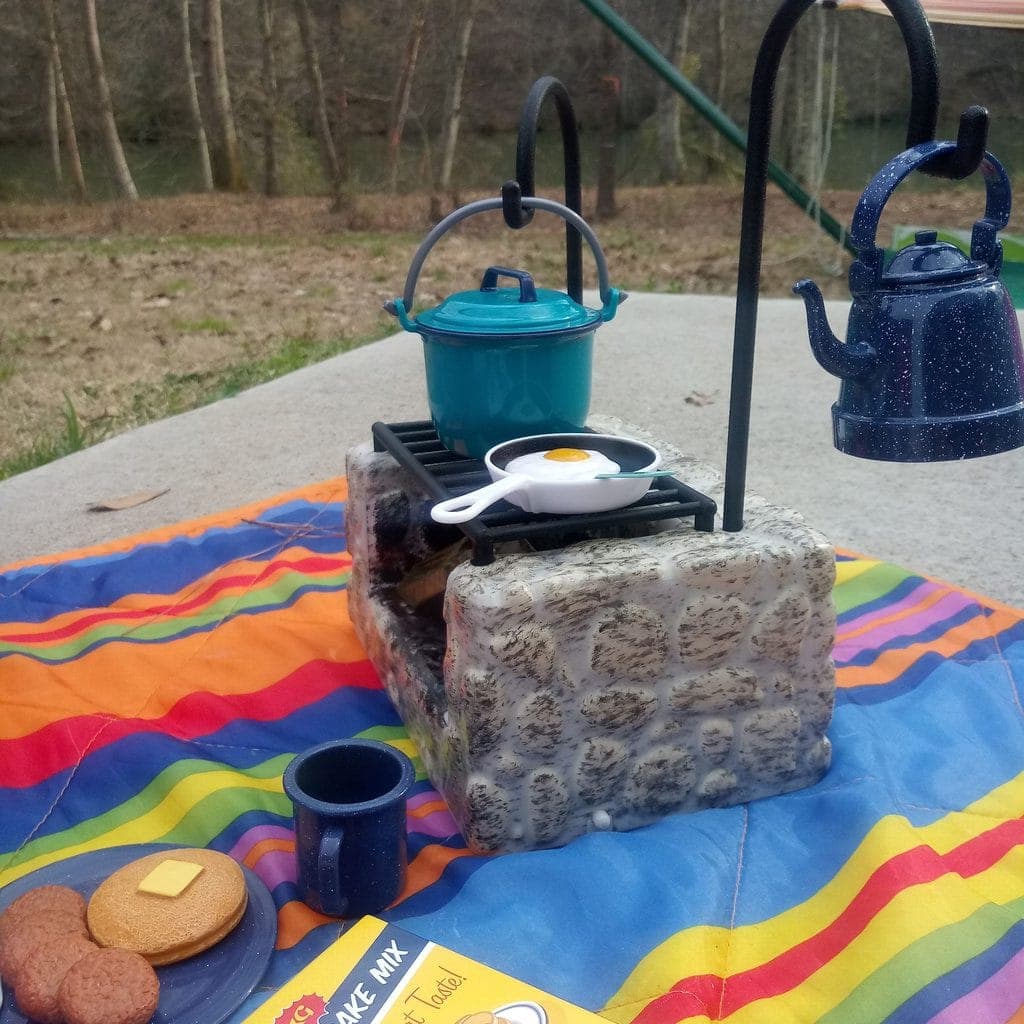
  • Camping Play Sets: Tents, toy campfires, and accessories let kids “camp” alongside you.
  • Explorer Backpacks: Lightweight bags for carrying toys or nature finds.

Tips for Choosing and Using Camping Toys

To make your camping toys for kids a hit, consider these practical tips:

  • Safety First: Ensure toys like slacklines or bug kits are used safely under supervision.
  • Pack Light: Choose compact, lightweight toys to save space in your camping gear.
  • Age-Appropriate Selection: Pick toys that match your kids’ ages and interests.
  • Designate a Toy Bin: Use a clear plastic bin to keep sandy or muddy toys contained.
  • Reserve Camping-Only Toys: Keep some toys exclusive to camping to make them special.
  • Check Campsite Features: Tailor toys to the site—water toys for lakes, kites for open fields.
  • Supervise Water Play: Always monitor kids near water for safety.
  • Involve the Whole Family: Choose games like cornhole or water relays that everyone can enjoy.
  • Eco-Friendly Choices: Opt for reusable glow sticks or durable toys to reduce waste.
  • Weather Prep: Pack indoor games like cards for rainy days.

The best camping toys for kids turn a simple trip into a magical adventure. From soaring kites to glowing lanterns, these toys to take camping keep kids engaged, active, and connected to nature. Whether you’re at a national park or a local campground, these fun toys for camping ensure everyone has a blast.

Thursday, August 21, 2025

IVF Journeys Go Public: Sharing Triumphs and Trials Online

IVF Journeys Go Public: Sharing Triumphs and Trials Online

Featured Image

The Journey of Sharing and Connection

After experiencing multiple pregnancy losses and several failed rounds of in vitro fertilization (IVF), Cheryl Dowling found herself in one of the most challenging periods of her life. She began sharing her journey on social media, hoping to find connection and a way to process her emotions. "Infertility was consuming every aspect of my life, yet no one around me seemed to see or understand the weight of it," she explains. Through her health platform and community, the IVF Warrior, Dowling has become a prominent figure in the infertility space. She has written a book titled Unspoken: The Unbearable Weight of Infertility and gained 127,000 Instagram followers.

When she started sharing her story, the response was overwhelming. "I quickly saw how many others were struggling, often feeling the same complicated mix of emotions," she says. Despite the global impact of infertility—where one in six people are affected, 10% to 20% of pregnancies end in miscarriage, and nearly 100,000 babies are born via IVF in the U.S. annually—there is still stigma attached to fertility treatments and infertility. This stigma, along with the silence that surrounds it, may be why many couples, especially women, are turning to social media and podcasting to find community, share their stories, and inspire others.

Why People Share Their Stories

For many, the decision to share their struggles with infertility stems from a deep need for connection and understanding. Demi Schweers, who documented her and her husband's journey through IVF, recalls starting the process organically. "I was in the thick of it, feeling alone, overwhelmed, and confused, and I realized if I’m feeling this way, there have to be others who are too," she says. The Schweerses now have over 2 million followers on TikTok, where they engage in frank conversations about the challenges of becoming parents.

Abbe Feder and her husband started the award-winning IVF podcast Maculate Conception. They didn’t initially plan to go public but found themselves documenting their experience as a way to cope with the emotional toll. "We had no intention of becoming voices in the infertility community, but as we kept documenting our experience, it became clear that others were craving exactly that: honesty, validation, and connection."

Actress Laura Orrico began sharing her journey a decade ago after her husband was diagnosed with brain cancer. He passed away in 2015, and she is now in her second trimester at 48 years old, thanks to IVF using her late husband’s sperm. Her choice to share this stage of her life came from a desire to connect with others facing similar challenges. "If I can help other women make this difficult decision, or inspire them to go through it alone, or at an older age, or after getting widowed, then it's worth it," she says.

The Challenges of Sharing

Sharing these personal experiences online comes with its own set of anxieties and pressures. Dowling admits she felt the pressure to constantly show up, even on days when she was struggling. "I thought I had to be strong for everyone else, even when I was breaking inside," she says. Over time, she learned to balance showing up with protecting her boundaries.

Orrico also worried about sharing more than she was comfortable with. "Getting through the first several weeks of appointments, I was nervous to post anything until I got to my next marker," she says. Parfet, who has shared her struggles with endometriosis and infertility, notes that finding the right care team helped her navigate the emotional challenges. "Our stories don’t need to be sanitized or made palatable to be worth sharing," she adds.

The Importance of Transparency

Sharing candid stories often means revealing aspects of the journey that were never expected. Feder recalls one of the hardest things they shared publicly: their experience with termination for medical reasons (TFMR), which is a clinical term for abortion. After years of failed IVF procedures, they became pregnant with three embryos. Due to serious health risks, they had to make the painful decision to reduce to two. "It was an abortion. And it was heartbreaking," she says.

The decision to share that part of their story was difficult, but it felt important to be transparent. "People need to understand that abortion is part of fertility care. That it’s not black-and-white. That it’s health care," Feder recalls her husband saying. "And he was right."

The Emotional Impact of Fertility Journeys

For many creators, IVF eventually leads to having a child, but some worry about sending the message that overcoming infertility is inevitable. Parfet, now a mother after years of trying, questions whether her voice is still relevant. "Now that I have a child, I sometimes wonder if my voice is still one people want or need to hear. I question whether my experience feels too far removed from the uncertainty so many are still living inside."

Schweers, now a mom of two, also worries about the impact of sharing moments of joy. "When I got pregnant or shared a moment of joy, I worried it might hurt someone who was still waiting for their turn. I never want anyone to feel like I’ve forgotten what it’s like to be in that place of waiting and longing."

A Cautionary Note

Dr. Iris Insogna of Columbia University Fertility Center notes that many of her patients mention IVF influencers and the positive impact they’ve had in reducing the stigma of fertility treatment. However, she cautions patients to interpret what they learn online carefully. "Not every journey is the same, and each individual will have a different path. Ultimately, decisions about medical care should be made between the patient and the provider, not based on information from social media."

Feder also reminds her followers that she is not a medical professional. "So many people are desperate for answers, they might follow influencers who aren’t medical experts and end up getting harmful or misleading advice," she says.

The Future of IVF Conversations

While the conversations around IVF continue to evolve, the costs associated with the procedures remain prohibitive for many. IVF is not universally covered by insurance, and in many cases, it remains highly politicized. Additionally, fertility care often overlooks the emotional toll of the treatments. "Clinics and media often focus on the physical treatments and outcomes, while the mental and emotional impact is still overlooked," says Dowling. "Many people, especially women, still feel blamed or judged for needing medical help to build their families."

Creating a platform for emotional care is at the heart of what many of these influencers do. "Mostly, it’s about making people feel less invisible," Parfet says about sharing her experience with both IVF and endometriosis.

As more people choose to share their journeys, the conversation around infertility continues to grow. For many, it’s about finding connection, reducing stigma, and helping others feel less alone. "Will this help someone feel less alone?" Schweers asks. "If the answer is yes, I try my best to be brave and share it."

Vista Careers: Lincoln Center for Family and Youth

Vista Careers: Lincoln Center for Family and Youth

Featured Image

About The Lincoln Center for Family and Youth

The Lincoln Center for Family and Youth, established in 1970, is a nonprofit organization that has grown into a dynamic social enterprise dedicated to improving the lives of individuals and communities. Based in Audubon, the center operates across multiple states, offering a wide range of services including K-12 alternative education, mental and behavioral health support, coaching, counseling, and trauma-informed training.

Collaboration is at the heart of the center's mission. It partners with school districts, universities, hospitals, law enforcement agencies, and other nonprofit organizations to provide comprehensive support and secure funding through federal and state grants. This commitment to partnership ensures that the center can offer impactful programs and services tailored to the needs of those it serves.

Community Counselor Position

The Community Counselor plays a vital role in delivering in-home individual, family, and group counseling services in the Norristown area, with a strong emphasis on trauma-informed care. The position involves working with clients facing various challenges, including parenting issues, therapy for children and teens, life skills development, supervised visitation, and intervention for drug and alcohol-related problems. Counselors also support individuals who have experienced physical, sexual, or emotional abuse.

Key responsibilities include providing counseling services in diverse settings such as offices, homes, and schools, adhering to specific policies and procedures, and advocating for clients with healthcare professionals, legal personnel, and service agencies. Counselors are also tasked with maintaining case records, assisting in program planning, and facilitating cooperation with community agencies and schools.

To be successful in this role, candidates must possess knowledge of multiple therapeutic modalities, including cognitive behavioral therapy, motivational interviewing, and trauma expertise. A minimum of an Associate’s Degree is preferred, along with at least two years of related experience, particularly in working with children, families, and individuals at risk for substance abuse.

Special Education Teacher Position

The Special Education Teacher position, located in Chester, offers a $5,000 sign-on bonus. This role involves working with students in grades 7-12 who have socioemotional and mental health needs, as well as learning disabilities. The teacher develops and delivers specialized instruction, evaluates student progress, and serves as the IEP Manager for assigned students.

Responsibilities include assessing student needs, developing teaching plans, and implementing instructional strategies that meet each student's unique requirements. Teachers must collaborate with other educators, counselors, and social workers to create a supportive learning environment. They are also responsible for managing IEPs, updating them throughout the school year, and communicating with parents, teachers, and administrators about student progress.

Ideal candidates should have excellent communication and relationship-building skills, the ability to work effectively in a team, and experience with IEP software. A Bachelor’s Degree and Pennsylvania Special Education Certification (for grades 7-12 or N-12) are required.

Math Teacher Position

The Math Teacher works with at-risk youth in grades 7-12 within an alternative school setting. This role requires flexibility to address the individualized instructional needs of students in a small classroom environment. The teacher must collaborate with other educators, special education staff, counselors, and social workers to support student growth.

Duties include developing a classroom culture that encourages active learning, using project-based learning techniques, leveraging technology to differentiate instruction, and creating a multi-sensory learning environment. Teachers are also responsible for monitoring student progress, maintaining accurate records, and building positive relationships with students and their families.

Candidates should have a Bachelor’s Degree and Pennsylvania Teaching Certification in the subject they teach. Strong communication skills, the ability to work in a team, and proficiency in Microsoft programs are essential for success in this role.

Explore Other Opportunities

The Lincoln Center for Family and Youth offers a variety of job openings across different roles and locations. These positions provide opportunities for professionals passionate about making a difference in the lives of individuals and communities. Whether you are interested in counseling, special education, or teaching, there is a place for you at the center. Explore all available positions and consider contributing your skills and expertise to this impactful organization.

Philadelphia Careers at Lincoln Center for Family and Youth

Philadelphia Careers at Lincoln Center for Family and Youth

Featured Image

Overview of The Lincoln Center for Family and Youth

Founded in 1970 by a behavioral health hospital, The Lincoln Center for Family and Youth (TLC) became a nonprofit organization in 1983. As an entrepreneurial social enterprise, TLC is dedicated to transforming lives and communities through various programs and services. Based in Audubon, the organization operates across multiple states, offering a wide range of educational and mental health support.

TLC provides K-12 alternative education, comprehensive mental and behavioral health services, coaching, counseling, and trauma-informed training. It collaborates with school districts, universities, hospitals, police departments, and other nonprofit organizations. These partnerships help secure federal and state grant funding, allowing TLC to expand its reach and impact.

Available Positions at The Lincoln Center for Family and Youth

Community Counselor

The Community Counselor plays a vital role in providing in-home individual, family, and group counseling services in the Norristown area. The focus is on trauma-informed care, addressing issues such as parenting challenges, therapy for young children and teens, life skills development, supervised visitation, and intervention for drug and alcohol-related problems.

Counselors are expected to work with a variety of assignments and integrate their efforts with other TLC programs and community services. They must be able to meet specific requirements for counseling positions, follow established policies and procedures, and advocate for individuals and families with healthcare professionals, legal personnel, and service agencies.

Key responsibilities include maintaining case records, assisting in program planning, facilitating inter-organizational cooperation, attending training sessions, and overseeing data gathering and reporting. Essential skills include knowledge of therapeutic modalities like CBT, motivational interviewing, trauma expertise, and substance abuse intervention. A minimum of an Associate’s Degree and two years of related experience are preferred.

Special Education Teacher

The Special Education Teacher position, based in Chester, offers a $5,000 sign-on bonus. This role involves working with students who have socioemotional and mental health needs or learning disabilities. The teacher develops and delivers specialized instruction, evaluates student progress, and manages IEPs (Individualized Educational Programs).

Responsibilities include working with students in grades 7-12, assessing student needs, planning teaching activities, and collaborating with educators, counselors, and social workers. The teacher must maintain a classroom environment conducive to academic and socioemotional growth while adhering to PA-mandated due process procedures.

Skills required include excellent communication, teamwork, knowledge of IEP software, and strong substance abuse intervention skills. A Bachelor’s Degree and Pennsylvania Special Education Certification (7-12 or N-12) are necessary.

Math Teacher

The Math Teacher provides academic instruction and socioemotional support to at-risk youth in grades 7-12 within an alternative school setting. The role emphasizes flexibility in meeting the individualized instructional needs of students in a small classroom environment.

Responsibilities include developing a classroom culture where the teacher acts as a facilitator, implementing lesson plans that encourage active learning, using technology to differentiate instruction, and promoting student wellness. The teacher must also maintain accurate records, build positive classroom communities, and participate in meetings with parents, counselors, and other staff.

Essential skills include excellent communication, teamwork, subject matter proficiency, and knowledge of Microsoft programs. A Bachelor’s Degree and Pennsylvania Teaching Certification in the subject taught are required.

Other Opportunities at The Lincoln Center for Family and Youth

In addition to the roles mentioned above, The Lincoln Center for Family and Youth offers a variety of other job openings. These positions provide opportunities to contribute to the organization's mission of supporting individuals and communities through education, mental health services, and community engagement. Prospective candidates can explore all available positions to find the best fit for their skills and career goals.

Monday, August 18, 2025

'Burned Out and Broken': Nurse Exposes Staffing Crisis at Children's Cancer Unit

'Burned Out and Broken': Nurse Exposes Staffing Crisis at Children's Cancer Unit

Featured Image

The Struggles of a Whistleblower in the Children’s Cancer Unit

Hannah Farrell, a former nurse at the Royal Belfast Hospital for Sick Children, has spoken out about her experience working in the Children's Cancer Unit. She resigned in 2019 due to overwhelming staff shortages and a lack of support from management. Farrell described the system as leaving her broken, disillusioned, and burnt out. She emphasized that the issues she faced were not new, but rather part of a long-standing problem that continued to affect the unit.

According to Farrell, maternity leave, long-term sickness, and career breaks were often not backfilled, leading to understaffing on the wards. This placed an immense burden on the remaining nurses, potentially impacting patient care. When a ward reaches crisis levels, the trust reportedly pulls nurses from other areas, which only provides a temporary solution and negatively affects other departments.

Farrell also shared her personal struggles with the emotional toll of her job. She was responsible for treating some of Northern Ireland’s sickest children, often dealing with the pain of a patient's death. However, she was not offered any professional counseling and had to pay for it herself. The Belfast Health Trust responded by stating that they provide individualized support through their occupational health services and encourage staff to raise concerns with their teams and line managers.

Despite the trust's statements, Farrell said that nothing has changed since she left five years ago. She expressed hope that speaking out would help other nurses who feel their voices are silenced by management. “The system took my fight, my joy, my empathy and compassion—there was nothing left to give,” she said. “I dreaded every shift because I didn’t know what I was going into, staffing-wise, or what the skill mix would be.”

Impact on Patients and Families

The Children’s Cancer Unit is the regional center where children in Northern Ireland receive treatment for cancer or complex blood disorders. Specialist cancer nurses are trained to administer treatments like chemotherapy. However, seven out of 12 specialist nurses are currently off work, which led to some treatment delays earlier this year. According to the trust, about five children were affected, but they have since received their treatment.

Parents of patients treated in the haematology and oncology wards have shared their experiences with the challenges faced by the nursing staff. David and Sara Watson, whose son Adam underwent treatment for acute myeloid leukaemia, highlighted the pressure on nurses. They noted that while the clinical service is world-class, staffing issues have been a persistent problem. Adam, who passed away in 2022, helped establish the B Positive charity to support families and provide counseling to nurses on the ward.

The Department of Health acknowledged the staffing challenges facing the Belfast Trust and recognized the efforts made to manage recent nurse staffing issues in paediatric haematology and oncology. They also noted assurances from the trust that service delivery is being closely monitored.

A System in Crisis

Caroline and Martin Smyth, whose son Theo was treated at the cancer unit in 2020, described how staff shortages impacted the wards. They mentioned that the 10-bed ward was often full, yet there was not always a full quota of staff, especially during weekends. The Belfast Trust stated that there are currently no nursing registrant vacancies at the Children’s Haematology Unit and that all nursing roles in the haematology and oncology departments have been reviewed. This allows the trust to utilize staff from other areas and bank staff to safely cover the service when needed.

Farrell, who still works as a nurse in the health service, said the unit is operating on the "fumes" of the nurses’ good nature. She described her last three overnight shifts as "horrendous," with too much responsibility placed on her shoulders. She oversaw a full ward of seriously-ill children, supported only by a bank and a junior nurse, which ultimately broke her.

She emphasized that the children and families deserved the highest level of care but felt she lacked the ability and support to deliver it. Farrell criticized the NHS for promoting an "it's OK to not be OK" attitude around mental health, yet expecting nurses to give more than they can. She still recalls the names and faces of the 56 children who died in her care, but never received any professional support.

Calls for Change

Parents of sick children continue to call for help with costs and better support for the nursing staff. The ongoing challenges at the Children’s Cancer Unit highlight a broader issue within the healthcare system. As the trust continues to address staffing issues, many believe that real change requires a deeper understanding of the skills and resources needed to properly run such a critical department.