Monday, November 24, 2025

Blazing Games: The Heat Hazard in Football Stadiums

Blazing Games: The Heat Hazard in Football Stadiums

The Heat Inside College Football Stadiums

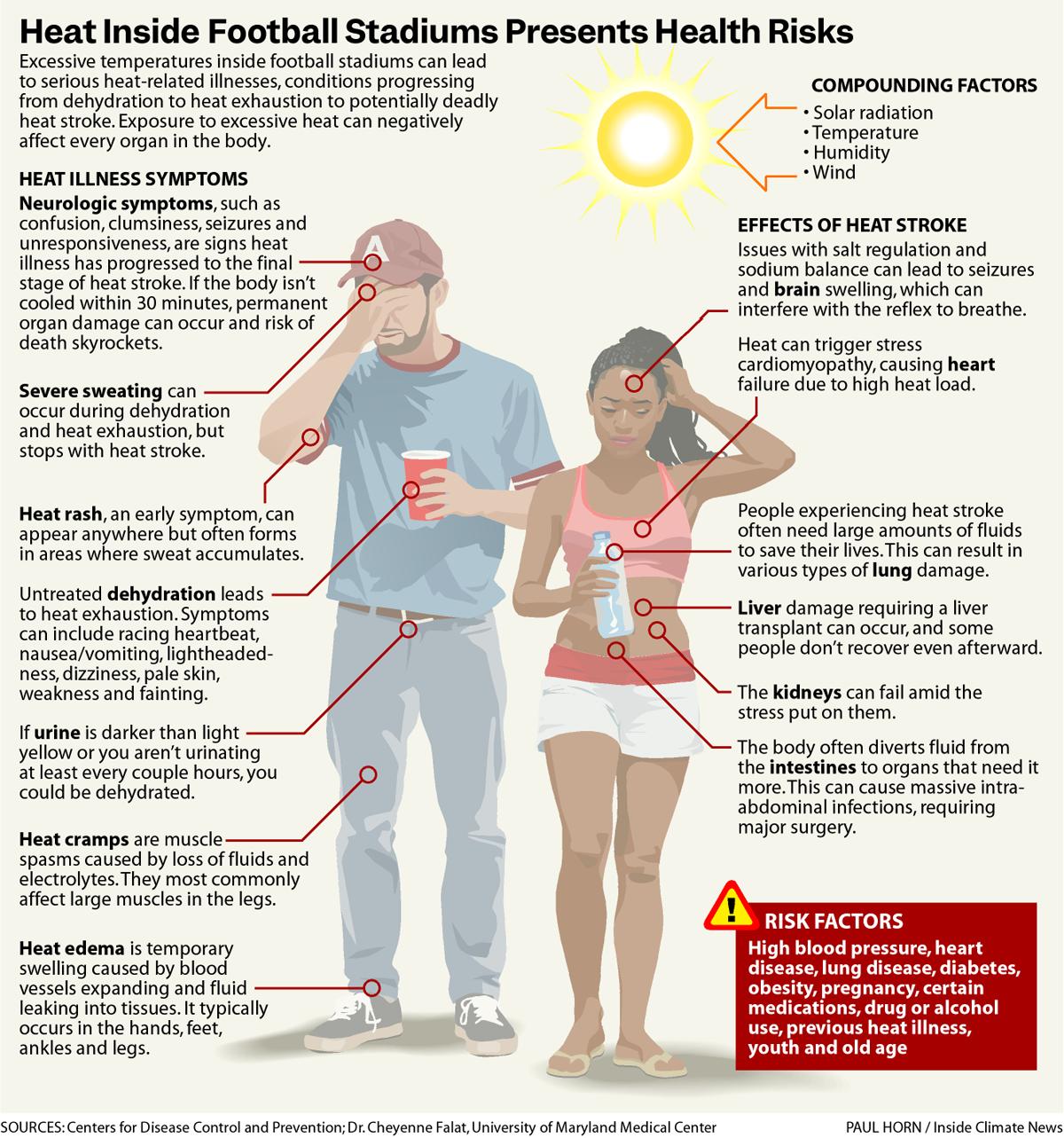
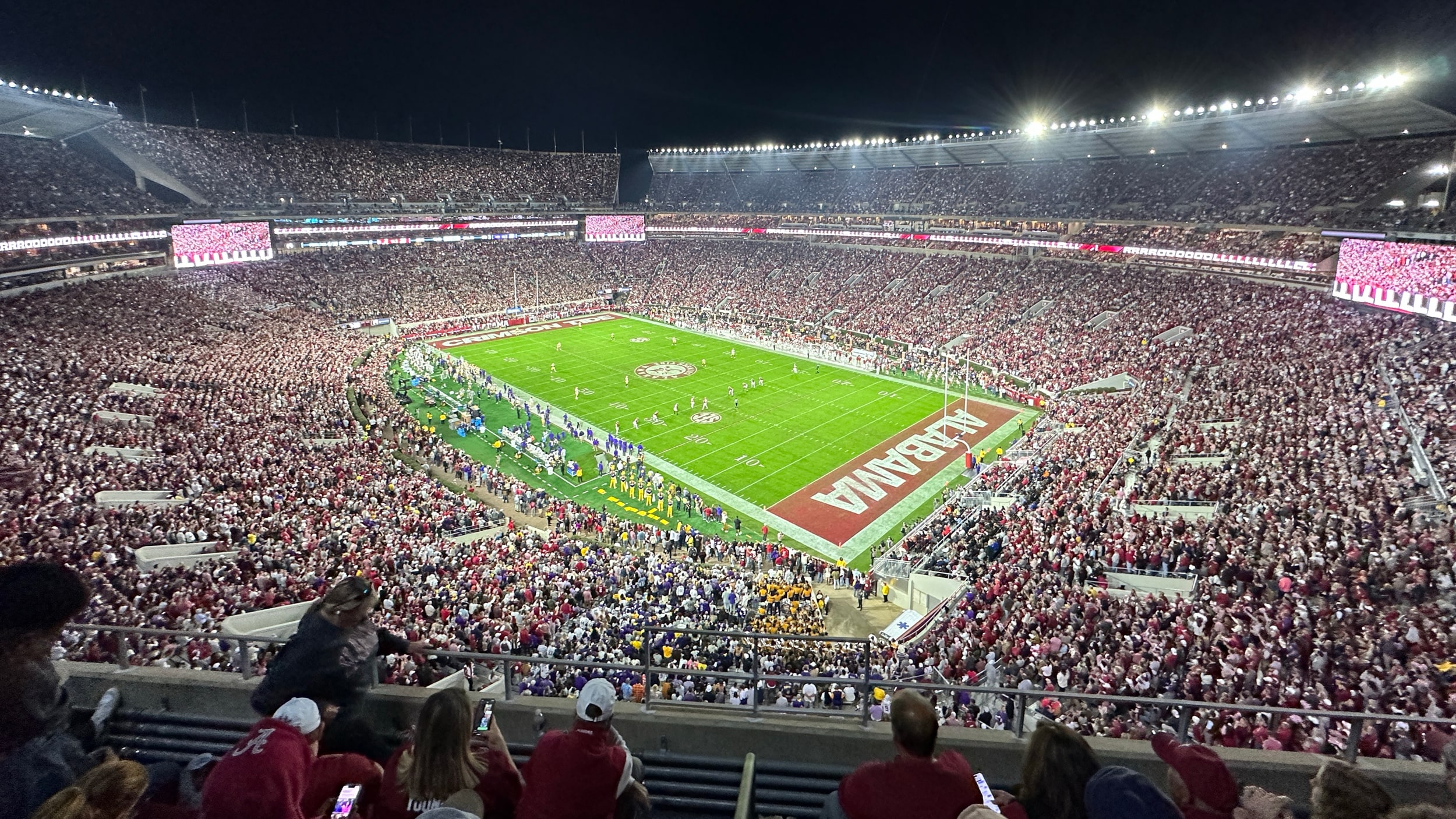
When Vanderbilt University football fan Douglas Dill set out with his son the morning of October 4 to watch their team play rival University of Alabama, he didn’t expect his game-day experience to include a gurney ride to a medical facility inside Bryant-Denny Stadium. But by the fourth quarter in Tuscaloosa, with the sun beating down on the upper decks, the 60-year-old needed medical help.

“It was smoking hot up there,” said Dill, who traveled from Nashville for the game. “The sun was burning me through my clothes. I needed to get up and get some fluids in me or I was going to go down big time. I was starting to get light-headed.” Dill, who operates a courier service with his wife, said he drank water throughout the day but that he had none left by the middle of the fourth quarter. His son and a stadium paramedic helped him down the steep upper-deck stairs to where additional emergency medical personnel were waiting with the gurney.

Paramedics treated Dill for dehydration as well as low blood sugar and monitored his blood pressure, which had climbed above normal. Dill has type 2 diabetes but does not usually have high blood pressure. While Dill missed the end of the game, he recovered enough for his son to drive him home.

Dill is one of hundreds of fans who have fallen ill from extreme heat in recent years at college games in powerhouse stadiums in the Southeastern Conference. The SEC, a collegiate athletic association, represents programs across a dozen states and accounts for 9 of the country’s 13 largest football stadiums.

ICN reviewed temperature studies of heat conditions at Auburn University, the University of Alabama, and Mississippi State University, and collected its own temperature measurements during two games in October, one at the University of Alabama in Tuscaloosa and the other at University of Alabama at Birmingham.

An Inside Climate News analysis of data from inside these Southern stadiums found that temperatures can spike for hours, from 10 degrees to 16 degrees Fahrenheit higher than outside heat, depending on the venue. Concrete surface temperatures in seating areas of the Tuscaloosa stadium measured over 130 degrees F.

Those high temperatures had consequences. Auburn University averaged well over 100 emergency calls per game in 2024, with the majority being heat-related. Halfway through the 2025 season, Alabama was averaging 60 to 65 medical calls per game, with 50 to 75 percent of calls during day games related to heat, according to interviews with medical personnel, though university officials provided lower numbers.

Auburn administrators said they are aware of excessive heat risks for spectators and are trying to enhance cooling efforts. University of Alabama officials said in a statement that “fan safety is a top priority” and that it aims to safeguard fans by providing cooling stations and emergency responders during games in Tuscaloosa.

The university informs spectators about the free water stations and first aid through websites, apps, social-media channels, and in-stadium announcements from the public-address system and on video screens, the statement said. The University of Alabama at Birmingham, which has a stadium about half the size of Tuscaloosa’s arena, has also provided cooling stations.

Still, none of the universities have made changes that could make the biggest difference in lowering the potential for illness: shifting game times or the season itself. That would require a much greater degree of cooperation — particularly because of the financial consideration of big college football — across athletic conferences.

Medical professionals said that spectators need help in assessing heat risks and making safe choices on game days.

“People tend to really want to be there, and so they will endure perhaps more physical discomfort to stay there throughout the event than they would if they were just taking a walk or doing stuff on their own,” said Dr. Cheyenne Falat, an assistant professor of emergency medicine at the University of Maryland who specializes in weather-related and heat illnesses.

Another factor that likely affects fans’ ability to withstand heat is alcohol consumption. Auburn, University of Alabama, and University of Alabama at Birmingham have recently allowed the sale of alcohol at games. Medical logs reveal that alcohol was a complicating factor at Auburn University for people treated for heat-related illnesses during games. Auburn began selling alcohol in 2024, the other schools in 2022.

As climate change intensifies, heat risks are likely to increase.

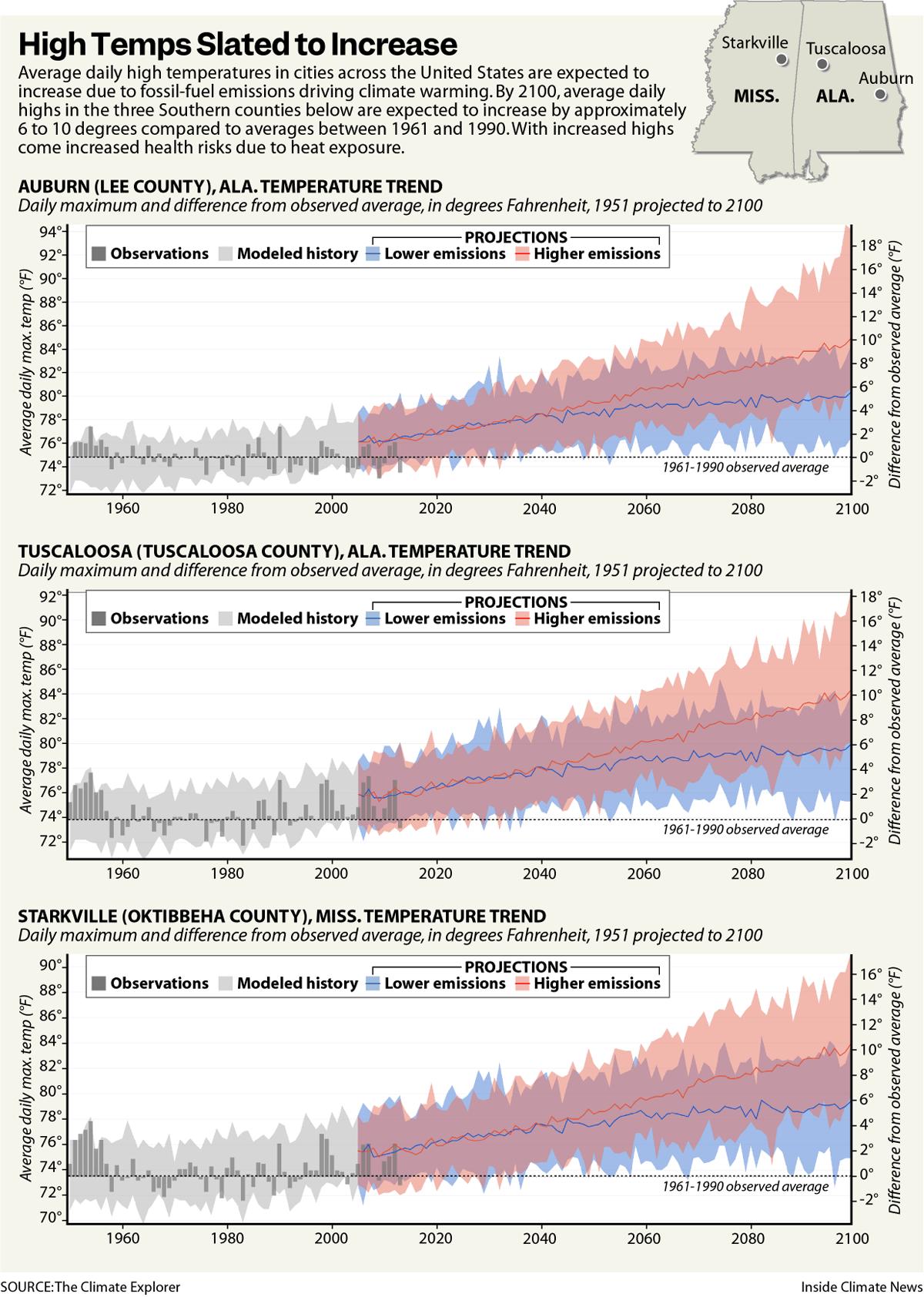
A federal government analysis of climate modeling predicts that by the 2040s, the average maximum daily temperature in Tuscaloosa, the home of the University of Alabama, will be 5 degrees F above the average registered from 1961 to 1990.

A researcher who has tracked heat risks at Auburn University’s Jordan-Hare Stadium — at 88,043 seats, second in capacity in the state only to the University of Alabama’s 101,821 — said his ongoing work is aimed at crafting possibilities to alleviate potential harm.

“I don’t want to say it’s out of the realm of possibility, per se, but I would say in terms of solutions, I think we have to face the reality that we are, in fact, going to have [midday] games,” said Brandon Ryan, an Auburn graduate researcher and teaching assistant in the department of geosciences. He’s been measuring in-stadium temperatures since 2023. “If that’s unavoidable, how do we tackle that problem?”
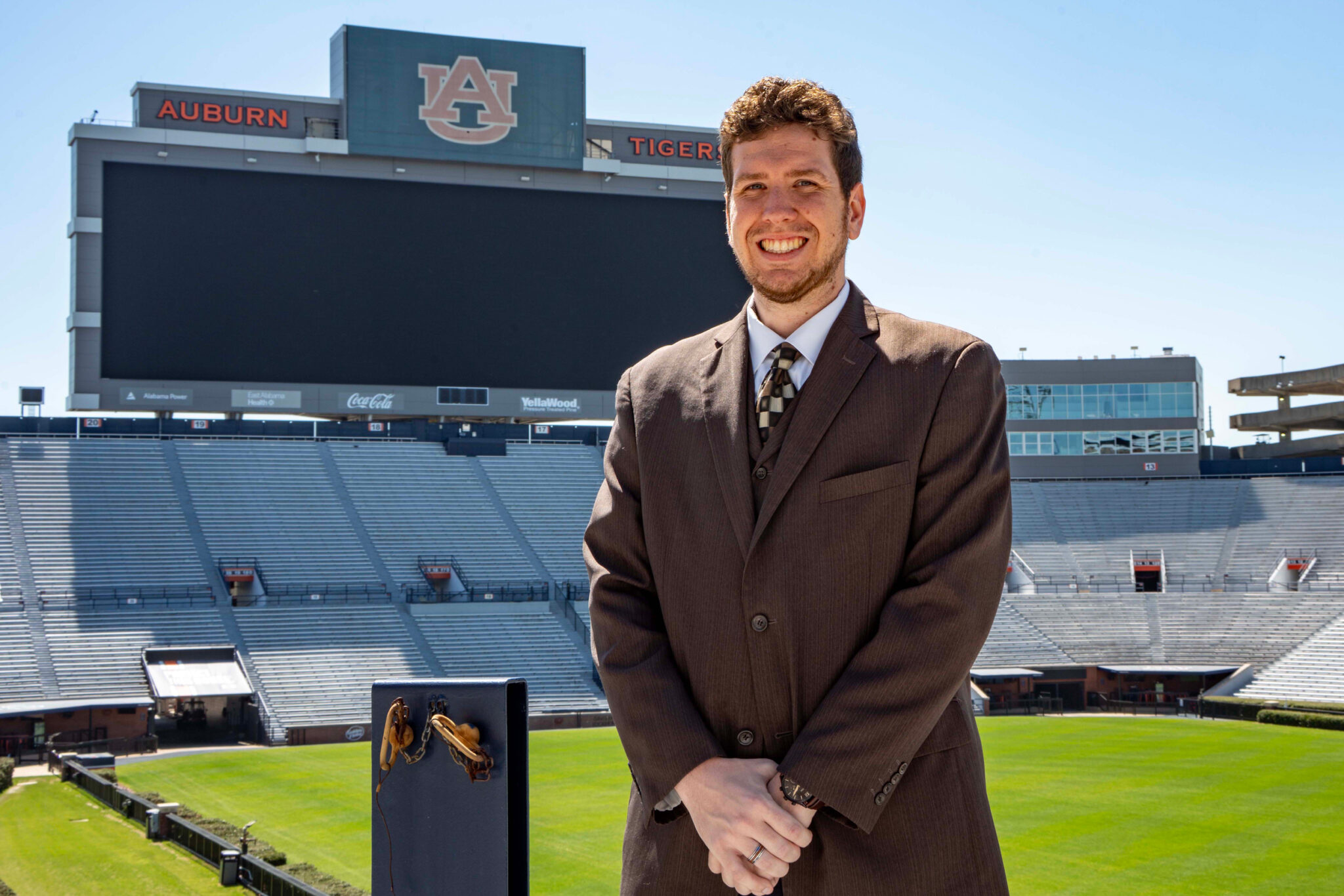
First responders busy

For a few months every year in Alabama, Saturdays are sacred. College football reigns as the king of sports across much of the South, and in this sun-drenched state, two fields hold dominion: the Alabama and Auburn gridirons.

But gathering to yell “roll tide” or “war eagle” as teams compete in these massive concrete stadiums comes with costs. First responders at these universities increasingly spend days, and sometimes nights, rescuing football fans exposed to excessive heat.

Wes Michaels, emergency services coordinator at the University of Alabama’s Bryant-Denny Stadium and a lieutenant with Tuscaloosa Fire Rescue, said 60 medical professionals were on hand for the Crimson Tide’s October 4 game against Vanderbilt, with its capacity crowd.

“You think, man, 60 people, that’s a lot,” Michaels said. “I’ll tell you, with 100,000 people in here, it gets really, really busy. Everybody is doing something, tending to a patient.”

Researchers at the University of Alabama in Tuscaloosa raised an alarm 15 years ago about in-stadium heat. An Auburn University research team, led by Ryan, continues to study heat stress among fans on much-anticipated game days at Jordan-Hare.

Ryan knows about sacred Saturdays — especially the hot ones.

One of them came on September 21, 2024, when Auburn played Arkansas.

Kickoff that day at Jordan-Hare was at 2:30 p.m. The high temperature at the university airport station was 88 degrees. The heat index, a measure of the “feels like” temperature that accounts for humidity, was around 90 degrees from noon through 5 p.m.

Inside Jordan-Hare, the 13th largest stadium in the United States, the temperature was much higher.

“It was brutal,” Ryan said.

He saw some fans in higher tiers leave their seats in search of shade in the stadium walkways. Many guzzled water. Others were less able to cope. Heat indices in the stadium, according to temperature sensors Ryan installed in seating sections across the facility, ranged from 97 to 114 degrees.

“They were literally dragging people out of the way,” Ryan said of medical personnel. He said his review of emergency service records found that first responders received 214 medical calls during that game, the majority of which were heat-related.

Ryan was not wholly surprised by the illnesses. He had been studying stadium heat for more than a year then, working with a faculty advisor and members of the university’s public safety team. Because of his ongoing research, Ryan has become the institution’s go-to expert on stadium heat, offering a scientific approach with a bit of a fan’s heart.
“I don’t want it to have to come to somebody dying, and maybe now we’re doing something about it,” Ryan said of his interest in stadium heat. “I don’t want it to be someone I know. I don’t want it to be one of my students.”

Ryan’s research conclusions and related recommendations have been shared with university officials and offer some sobering conclusions about game-day health risks.

Temperature and humidity observations measured throughout Jordan-Hare Stadium from 2023 to 2025 revealed that the heat index in the facility regularly reached 10 or more degrees above that measured outside its walls. During some games, heat indices inside the stadium, built in 1939, rose to over 100 degrees, according to Ryan’s research.

Ryan said that large sports stadiums like Jordan-Hare can trap excessive heat for several reasons. High-capacity stadiums pack in spectators, and people who sit for the average three-hour game may find themselves hostage to the sun. High humidity is also a problem, limiting the body’s natural cooling ability.

James Spann, chief meteorologist for the ABC affiliate in Birmingham, attends all the University of Alabama home games in Bryant-Denny Stadium as a weather advisor to coaches. Known for engaging live broadcasts during severe weather events and for focusing on weather-safety education, Spann helps spectators stay on top of the weather, too. He issues updates that are shared on the stadium’s large video screens.

Body heat adds to the thermal load inside the stadium, increasing air temperature by 2 to 5 degrees, Spann said. Artificial turf can heat up to 20 to 30 degrees hotter than the ambient air, he continued, and concrete and metal stands absorb and radiate heat.
And where a fan sits — in the sun or in the shade — can make a big difference, too, according to Spann. Seating areas in the sun in Bryant-Denny Stadium can be 10 to 15 degrees warmer than shaded areas, “so if you’ve got a day where it’s 90 degrees, it could be 105 in the sun,” he said.

Spann said fans know this, but 7 of 8 spectators randomly interviewed during the October 4 game underestimated how hot it got inside the stadium, giving the day’s forecasted high in the mid-80s or a lower number. An Inside Climate News reporter measured temperatures as high as 96 degrees in the stadium that day.

Asked about whether the public and designers and operators of sports stadiums need to take rising maximum daily temperatures into consideration in their decision-making, Spann referred such questions to Alabama’s state climatologist, John Christy, who notably rejects mainstream climate science. Christy has argued there is no causal link between CO2 emissions and a warming climate.

Even when weather conditions are overcast and breezy, as they were during University of Alabama at Birmingham’s October 4 game against Army in Protective Stadium, a significant temperature difference can occur between inside and outside the stadium, which seats about 45,000 people.

That day, kickoff was at 11 a.m. and measurements taken by an Inside Climate News reporter that day recorded a difference in air temperatures of as much as 10 degrees — depending on sun exposure — even in a newer stadium. Protective Stadium opened in 2021.

Ryan said his data at Auburn’s Jordan-Hare Stadium shows that sun exposure has a clear and measurable impact on the relative comfort of a particular seat.

“Day games are extremely problematic,” Ryan said. “Night games, not as much.” Over three seasons of observations, Ryan said his measurements recorded heat index values exceeding 115 degrees at least once during both the 2023 and 2024 seasons, both on late September day games.

During that same two-year period, elevated temperatures inside the facility have led to more than a thousand heat-related medical calls to first responders, records show.

On the day of the 2024 Auburn-Arkansas game, Ryan said, sensors in 7 of 9 seating sections across Jordan-Hare measured “feels like” conditions above 103 degrees. Temperatures exceeding that are characterized as dangerous by experts, making “heat cramps or heat exhaustion likely, and heat stroke possible with prolonged exposure and/or physical activity,” according to the National Weather Service.

Ryan has also relied on data from Auburn university officials to collate his findings. In 2023, there were as many as 43 heat-related medical calls per game, university records showed.

Spectators at Jordan-Hare suffered heat-related illnesses including nosebleeds, seizures, dehydration, and low blood sugar and complaints of feeling lightheaded and dizzy. Other fans called first responders for abdominal pain, nausea, vomiting, heart palpitations, and difficulty breathing.

By 2024, medical calls increased significantly inside the stadium, according to Ryan’s research.

First responders averaged 161 calls per game for a total of more than 805 calls at all home games, the majority of which were for heat or cardiac-related events, records revealed.

In the 2023 dataset, of the 113 emergency calls attributed to heat-related illness, 44 involved individuals who fainted or were reportedly “about to faint.”

Numerous heat-related incidents reported inside Jordan-Hare included alcohol as a contributing factor, according to medical logs reviewed by ICN. Although the school did not begin to sell alcohol inside the stadium until the 2024 season, experts say alcohol use may have exacerbated the risk of heat-related illness.

Alcohol contributes to heat illness in two ways, said Falat, the University of Maryland expert on weather-related illnesses and the university hospital’s assistant medical director for the adult emergency department.

Alcohol dehydrates, she said, and dehydration is an initial stage of heat illness that can lead to heat exhaustion and heat stroke. Then, “as you drink more and more, your ability to recognize your symptoms becomes impaired … and that’s when we start to really, really enter that danger zone,” she said.

Spann, the meteorologist, said alcohol consumption during early-season day games at Bryant-Denny Stadium in Tuscaloosa has proved to be a significant problem. “The worst thing you can do is drink a lot of alcohol on a hot day out there in the sun, and nothing good is going to come out of that,” he said.
The university challenge

Since 2023, Ryan has been submitting recommendations to Auburn University officials, outlining the empirical data from the research team and making policy suggestions aimed at mitigating health risks.

Ashley Gann, Auburn’s public information officer for campus safety and security and a meteorologist herself, said Ryan’s work “was incredibly valuable” and has helped administrators build a strategic heat plan.

“His work helped validate the importance of our existing heat plan and gave us the data we needed to refine it even further,” Gann said. “Thanks to Brandon’s study, we were able to concentrate resources in the areas of greatest need and engage in more strategic pre-planning for both football and baseball events. His contributions have strengthened our ability to protect fans and staff from heat-related risks.”

Earlier research at the University of Alabama in Tuscaloosa stands as a precursor to Ryan’s findings, which he is continuing to refine and plans to publish.

Fifteen years ago, researchers conducted a study similar to Ryan’s at Alabama’s Bryant-Denny Stadium.

Barrett Gutter, now an assistant professor of meteorology at Virginia Tech, tracked temperature data in Bryant-Denny Stadium as part of his student research in 2009. The facility was constructed in 1929 and has been expanded multiple times.

Gutter collected readings at six locations inside the stadium during a game in October 2009 and compared them to temperatures recorded at the National Weather Service station at Tuscaloosa Regional Airport. He found “significantly warmer temperatures” at each location inside the stadium.

Temperatures in the concourse areas were up to 17 degrees higher than those at the airport, while temperatures at field level seating and in the upper decks were recorded 10.5 degrees and 13 degrees warmer, respectively.

Gutter’s study was conducted before a stadium expansion in 2010 that enclosed the south end zone and added an upper deck with about 9,000 seats. The stadium also added artificial turf sidelines in 2023. Gutter said in a recent interview that temperature differentials likely would be greater today.

“When you close in a stadium like they did, it really limits the amount of air flow and circulation you’re going to get in there,” he said. “You basically are just in a bowl, and so all of that heat has a harder time basically evacuating that stadium. When you have an open end zone, you have a way for that heat to escape.”

Gutter’s research provided some telling geographical detail about seating risks then. Field-level temperatures between 3:15 p.m. and 5 p.m. were about 6 degrees higher on the east side versus the west side of Bryant-Denny Stadium. The western section of the upper deck casts a shadow that gradually covers seating on the western side of the stadium during that time period, Gutter observed. The shadow cooled the temperature sensor in that location.
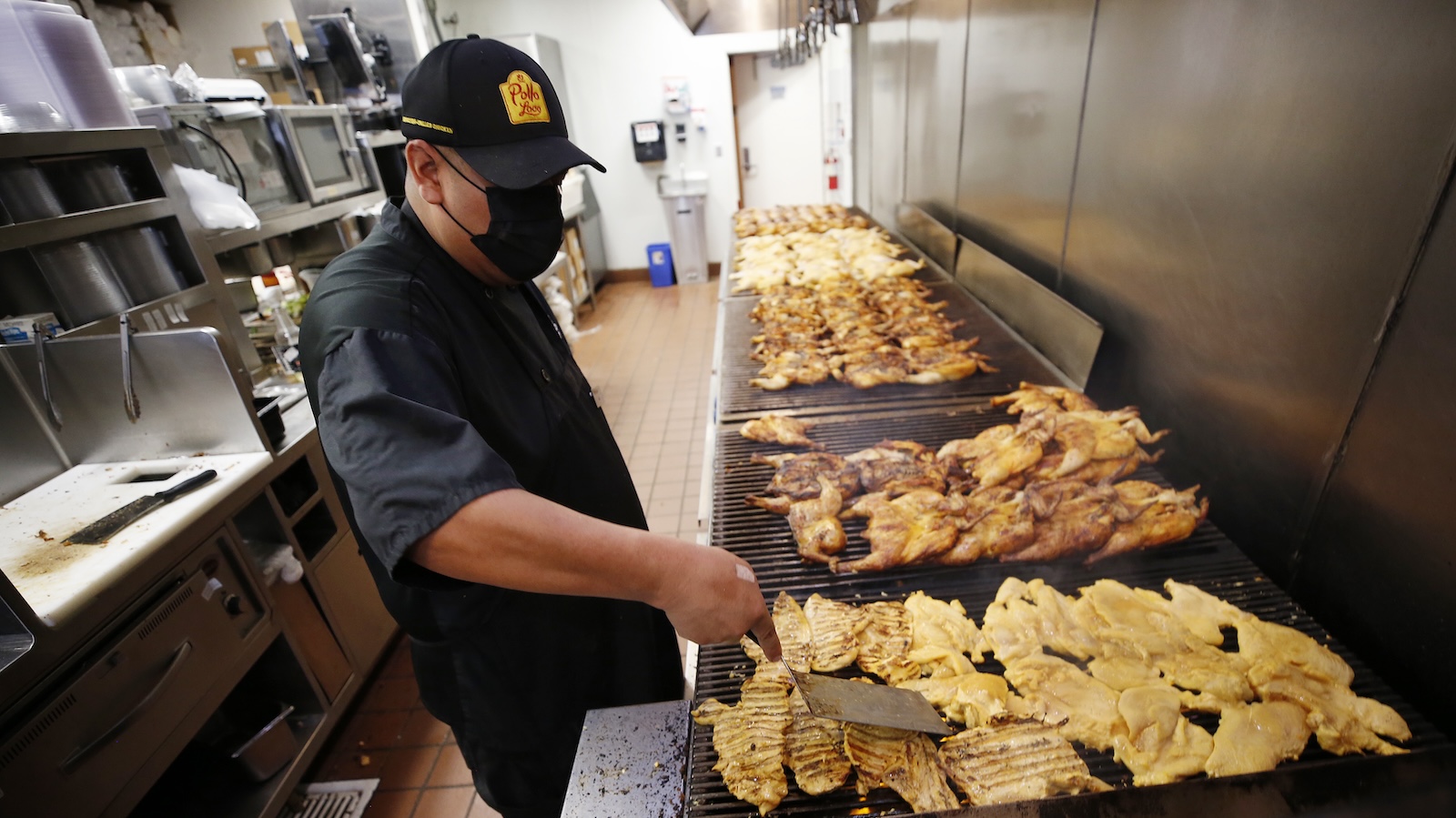
Workers are facing dangerous heat — even inside fast-food restaurants

Frida Garza

Gutter later pursued research on stadium heat at Mississippi State University, where he was a professor. Last year, he and three other researchers published a study in the journal Atmosphere that analyzed the impact of heat exposure on spectator health at Mississippi State’s Davis Wade Stadium.

The researchers deployed 50 sensors around the arena and measured temperature and humidity from August through November 2016. They compared that data with readings at a weather station near Mississippi State as well as first-aid and emergency medical data from the university’s office of emergency management.

“What I got out of that study, more so than anything, was, on a spatial and temporal scale, how much fluctuation you see even through a game, which is the influence of shade,” Gutter said.

Gutter said the Mississippi study solidified findings from the Bryant-Denny research. Heat-related illness comprised up to two-thirds of cases requiring first-aid at Mississippi State. The majority of heat-related incidents occurred in the most thermally oppressive parts of the stadium, according to the study.

The study concluded there was a need for greater monitoring of heat exposure inside stadiums, better education for spectators regarding heat-mitigation strategies, and stadium design modifications to improve circulation, increase shade and reduce crowding.
The search for water

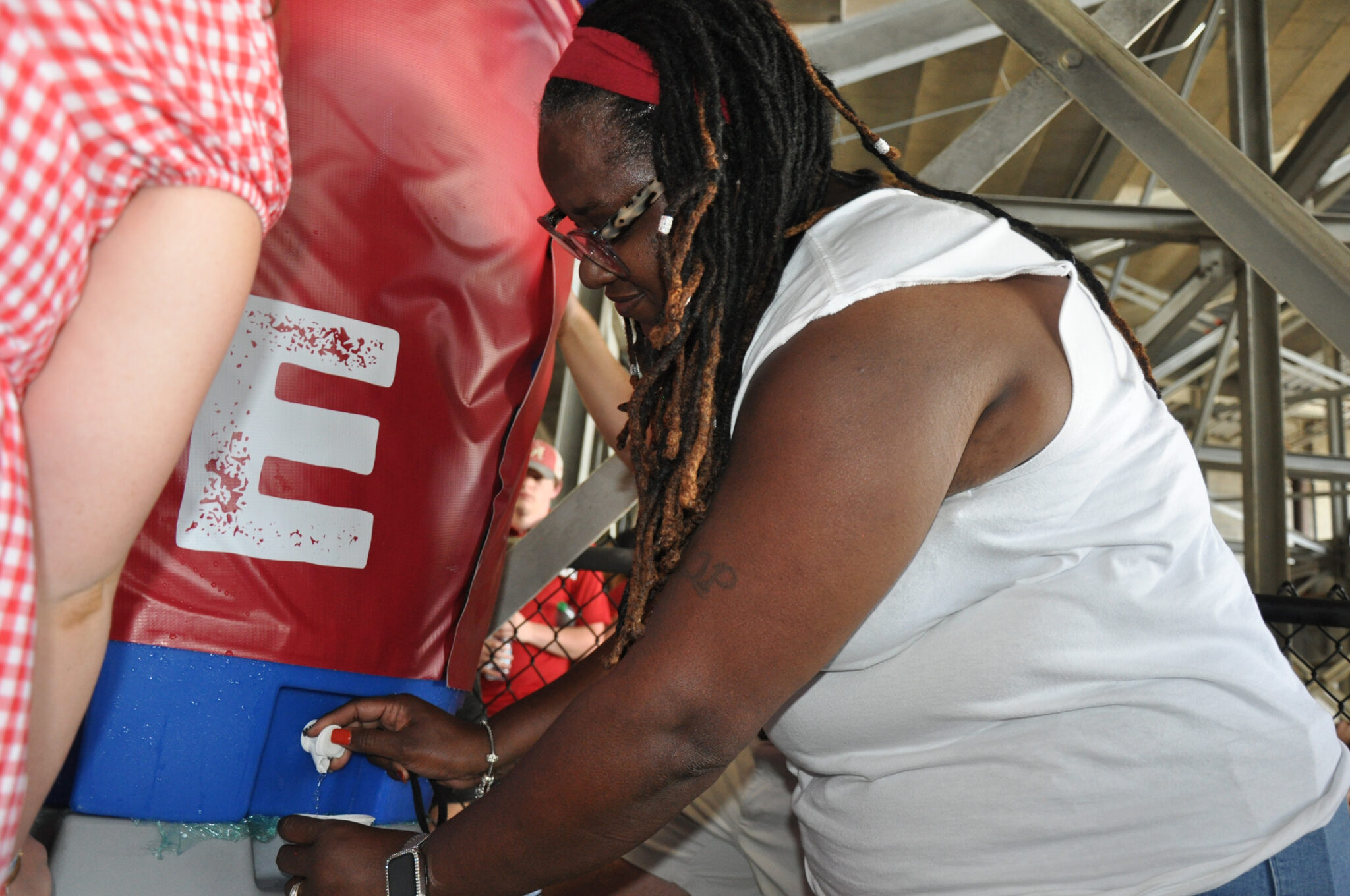
On the day in October that Douglas Dill fell ill at the University of Alabama, a reporter for Inside Climate News recorded temperatures inside and outside Bryant-Denny Stadium. The readings were recorded from 12:08 p.m. to 4:55 p.m. and approximately every 30 minutes during the game. Air temperatures were measured using a probe thermometer, and an infrared thermometer was held above concrete and metal in seating areas to measure surface temperatures.

Temperatures were recorded on the eastern side of the stadium, where spectators were in direct sunlight for the entire game.

At 2:30 kickoff time, an air temperature reading in the upper deck of the stadium was 11 degrees warmer than the temperature recorded at the airport. Temperatures measured inside the stadium ranged from 85 degrees to 96 degrees.

Emergency calls

Emergency medical staff who operate a 10-bed first-aid facility at Bryant-Denny Stadium said on October 4 they had received an average of 60 to 65 medical calls per game at that point in the 2025 season. Not all calls are heat-related. The percentage of heat calls depends on game time, temperature and time of year, according to Michaels.

“Heat is one of our biggest challenges we face,” Michaels said.

During the October 4 game, 50 percent to 60 percent of calls were heat-related, with most people suffering from heat exhaustion or fainting, said Michaels, who has worked as a first responder at the stadium since 2009. Problems slowed in the second half as shade spread over the western half of Bryant-Denny Stadium, he said.

On September 13, during the Wisconsin-Alabama game that kicked off at 11 a.m., every bed and chair in the first-aid facility was occupied, Michaels said. The high temperature outside the stadium that day was 92 degrees.

There were more than 70 EMS calls during that game, and approximately 75 percent were heat-related, Michaels said. “The Wisconsin game was very challenging as far as managing the heat-related stuff,” he said. “Crews did a really good job of getting people to where they needed to go, whether it be a cool zone, whether it be one of the first-aid rooms or whether it be the hospital.”

There have been games with as few as about 10 calls, he continued, and those are typically at night or late in the season.

Michaels said people planning to attend a game should know what the physical demands are and consider their health conditions. They should be aware, for instance, that they might have to walk a mile and half in the heat just to get to the stadium, then walk up spiral ramps and stairs to get to their seats, he said.

“That can be a lot,” he said. “Folks have to know their limitations.”

Other medical professionals said much the same, adding that people should wear ventilated clothing and shaded hats, use cooling rags and stand near fans when possible on hot days. Elderly people, young children and those with certain medical conditions or who are taking particular medications are especially vulnerable to heat risks.

Heat already kills more Americans than any other weather-related hazard, according to the National Weather Service, and climate change is leading to more frequent, intense and longer-lasting heat waves, Falat said.

“It’s absolutely expected that deaths and other complications from heat-related illnesses will rise as those events rise, but it is also an opportunity for us as a society to really increase our public health awareness of these events, because the statistics don’t have to follow suit,” she said.

Dr. William Barton, assistant medical director of the emergency department at DCH Regional Medical Center, located 2 miles from Bryant-Denny Stadium, said the football season also affects his emergency department. Between 50 and 100 people are treated at the stadium’s first-aid facility during some games, he said. Paramedics send an average of 10 to 20 people per game over to the medical center’s emergency room, Barton said, and the majority are experiencing heat-related illness.

The university provided far lower numbers of illness to Inside Climate News.

“So far this season, EMS has responded to 18 heat-related calls during three home football games,” according to the university statement dated October 10. “Last season, EMS responded to 26 heat-related calls during seven home games. During the past two seasons, two fans were transported to the hospital for heat-related illness.”

“Hydration is the big thing,” Barton said. “That’s where most people run into trouble. Your skin does what’s called evaporative cooling, and in the process of that, you lose a lot of fluids from your body. You are going to find yourself in a position where you’re becoming dehydrated, and you really didn’t know that you were.”

Minor changes, major stakes

Universities are making some headway in addressing heat risks in their football stadiums.

The University of Alabama added cooling stations a decade ago, and that has made a difference, Michaels said. “Before those cooling stations were installed, it was nothing to have 100 calls in a ball game,” he said about Bryant-Denny Stadium. “And when the university invested the resources to permit those cooling stations, it drastically affected the call volume.”

Both Gutter and Ryan said that there are other small steps that universities can take such as improving air circulation, creating more shaded areas in the stadiums, increasing access to cooling stations and improving education about heat-related illness.

Decisions that could limit the most risk, experts said — banning midday games during warmer months, enclosing stadiums or building climate-controlled facilities, and even shifting the football season to later in the year — do not seem likely.

Global sports have begun to adapt to the realities of a warming climate, Ryan said, and some leagues may be setting an example for U.S. athletics.

“FIFA had to change the way they did the World Cup,” Ryan said. “We even saw it with the Paris Olympics. If the Olympics are having to think about this sort of stuff, we’re probably gonna have to think about these things too.”

Heat-related deaths, Ryan said, are ultimately avoidable.

“I care about this university a lot. I care about my students a lot. I want them to come to the game to watch the game, and I don’t want them to worry about their grandma passing out,” he said.

Douglas Dill doesn’t regret his day at Alabama’s Bryant-Denny Stadium. His team lost, 30-14. But he said Vanderbilt played a good game and his heat-illness episode won’t deter him from witnessing future ones.

“I love football, and nothing will keep me away from it,” Dill said.
Celtics Lose Starter, Hold Off Magic in Thrilling Comeback Win

Celtics Lose Starter, Hold Off Magic in Thrilling Comeback Win

Celtics Overcome Injury to Queta with Strong Team Effort

A long-term injury to Neemias Queta could have been a significant setback for the Boston Celtics. However, in this particular game, the team found a way to thrive without their starting center.

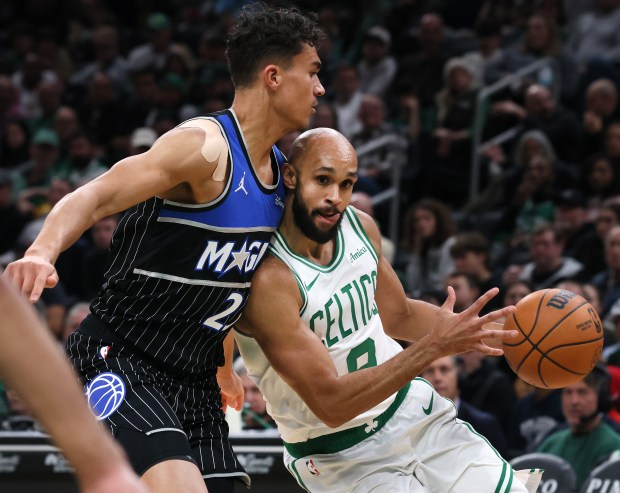
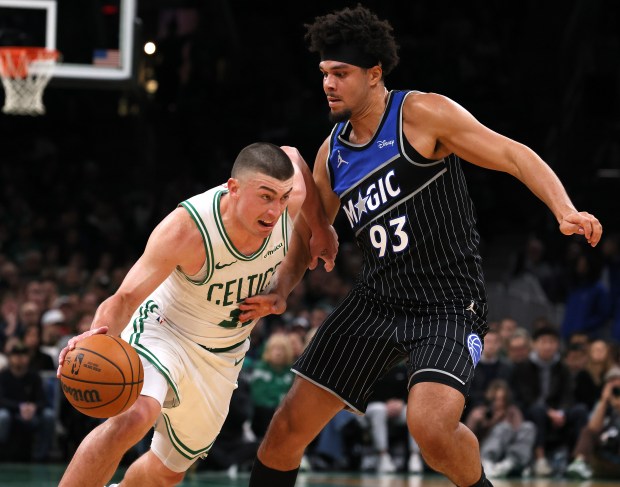
The Celtics defeated the Orlando Magic 138-129 at TD Garden, despite losing Queta to an ankle sprain early in the first quarter. The victory was a much-needed bounce-back for the 9-8 Celtics, who had struggled against the Nets just days earlier. Jaylen Brown had criticized the team's lack of effort and enthusiasm after that loss, but the performance against the Magic was a stark contrast.

Boston showcased strong energy throughout the game. They shot an impressive 60.2% from the field and made 45.5% of their three-pointers. The Celtics scored 48 points in the second quarter and led by 21 entering the fourth. Although the Magic staged a late-game rally, the Celtics managed to pull away and secure the win.

Key Performances and Strategic Adjustments

Six Celtics players scored in double figures, with Jaylen Brown leading the charge with 35 points on 14-of-26 shooting. Anfernee Simons, Sam Hauser, and Josh Minott combined for 53 points off the bench, hitting 10 of their 17 three-point attempts. Payton Pritchard contributed 19 points and eight assists, while Derrick White added 16 points, seven rebounds, five assists, three blocks, and two steals.

The Celtics committed just five turnovers, tying their season low. This efficiency was crucial in maintaining their lead throughout the game.

Facing a smaller Orlando team, Celtics head coach Joe Mazzulla made strategic adjustments. After Queta’s injury, he opted for a more athletic lineup, inserting Chris Boucher and Josh Minott into the rotation. This decision allowed the team to play faster and create more offensive opportunities. Mazzulla acknowledged the trade-offs, noting that while there were disadvantages to playing smaller, the speed and pace of the offense were significant advantages.

Bench Contributions and Efficient Play

The Celtics' bench played a pivotal role in the win. The first three possessions after Queta's injury resulted in three-pointers by Hauser and Simons. Brown then took over, scoring with midrange jumpers, drawing fouls, and driving for layups. Simons closed the quarter with another three and a floater.

Simons had another strong performance, contributing 23 points on 10-of-16 shooting. His ability to score in various ways was a key factor in the team's success. Hauser also returned to form, making four of his seven three-point attempts after a recent slump.

In the second quarter, Boston's efficiency was remarkable. They attempted 22 field goals and made 18 of them. Josh Minott hit two threes and two dunks, while Payton Pritchard controlled the final minutes of the half with steals and quick points. Pritchard's contributions helped the Celtics reach 80 points in the first half, a rare feat in franchise history.

Late-Game Resilience

Although the Celtics maintained a comfortable lead through the third quarter, the Magic made a strong push in the fourth. Orlando reserves Jett Howard and Jase Richardson led the comeback, with Howard scoring 30 points and Richardson adding 18. However, Boston held steady, thanks to 13 fourth-quarter points from Brown, a last-minute layup from Pritchard, and late free throws from White.

Anfernee Simons praised the Magic's resilience, noting that their fresh legs and hunger to prove themselves gave them an edge. Despite the challenges, the Celtics managed to secure the win, showcasing their depth and adaptability.

The Celtics will face the Eastern Conference-leading Pistons on Wednesday, continuing their quest for consistency and success. With Queta's injury, the team has shown they can thrive even without their starting center, thanks to strong performances from their bench and strategic adjustments.

MS Medicaid patients struggle to access weight loss drugs

MS Medicaid patients struggle to access weight loss drugs

The Rise of GLP-1s and Their Impact on Medicaid Coverage

April Hines, a 46-year-old from Mississippi, has spent much of her life battling obesity. However, in recent years, she has made significant progress, shedding over 200 pounds and improving her overall health. Her journey is largely attributed to Trulicity, a drug belonging to a new class of weight loss medications known as GLP-1s. These drugs have become a focal point for many individuals struggling with obesity, especially those covered by Medicaid.

Mississippi's Medicaid program took a bold step in 2023 by including GLP-1s in its coverage for individuals aged 12 and older. This decision was notable because only 13 states cover these drugs for Medicaid recipients, and Mississippi’s Medicaid program typically offers limited benefits. Despite this, the uptake of these medications has been slower than expected, with just 2% of eligible adults receiving a prescription by December 2024.

Challenges in Accessing GLP-1s

The slow adoption of GLP-1s in Mississippi has been influenced by several factors. National drug shortages, a complex prior authorization process, and a lack of marketing have all contributed to the low usage rate. William Rosenblatt, a family doctor in Columbus who treats Hines, expressed disappointment that so few people are benefiting from these drugs. He emphasized that GLP-1s address the root causes of many health issues, making them a valuable tool in managing chronic conditions.

However, the future of GLP-1s in Medicaid coverage is uncertain. Federal funding cuts, stemming from a recent tax-and-spending bill signed by President Donald Trump, could lead to reduced coverage. The Congressional Budget Office estimates that the law will cut Medicaid spending by $911 billion over a decade. This financial pressure may force states to reconsider expanding benefits, particularly for costly medications like GLP-1s, which can cost around $1,000 per month.

The Cost-Benefit Dilemma

Despite their high cost, GLP-1s have shown promise in treating obesity and related health conditions. These drugs, originally developed for Type 2 diabetes, have gained attention for their effectiveness in weight loss and reducing obesity-related complications. However, states remain hesitant to expand coverage due to the long-term nature of the health benefits. For example, the reduction in heart attacks or strokes may not be evident for years, and the financial benefits might accrue to other insurers rather than Medicaid itself.

North Carolina recently dropped its coverage of GLP-1s, citing their high cost. This decision highlights the challenges states face in balancing the immediate costs of these drugs with potential long-term savings. The Trump administration has also faced criticism for its stance on GLP-1s, with Health and Human Services Secretary Robert F. Kennedy Jr. downplaying their necessity and emphasizing diet and exercise instead.

Federal Policy Shifts

In contrast, the Biden administration proposed covering weight loss drugs under Medicare and Medicaid to combat obesity as a public health crisis. However, the Trump administration revoked this proposal, stating that the programs would not cover GLP-1 drugs for weight loss. Despite this, there have been rumors of a potential five-year pilot program for Medicare and Medicaid to cover these drugs, although no details have been released.

The Trump administration has also included GLP-1 drugs such as Ozempic, Wegovy, and Rybelsus on its list of medicines subject to price negotiations under Medicare Part D. The results of these negotiations are expected this fall, potentially impacting the affordability of these drugs for patients.

Limited Coverage and Patient Experiences

Most private insurers do not cover GLP-1s for weight loss, making them unaffordable for many patients. In Mississippi, the first 15 months of coverage saw only about 2,900 Medicaid enrollees starting treatment. Nearly 90% of these patients were female, and many had comorbidities such as high blood pressure and high cholesterol.

The analysis also revealed that most users lived in the southern, central, or northern parts of Mississippi, rather than the Mississippi Delta, where obesity rates are highest. About 40% of adults in Mississippi are obese, placing the state just one percentage point behind West Virginia.

Medicaid's Perspective

Mississippi Medicaid spokesman Matt Westerfield noted that the state spent $12 million in the first 15 months, providing the drugs to 2,200 adult members. While utilization has been below projections, Westerfield emphasized that treatment decisions are up to patients and their doctors. The state has been working to raise awareness among healthcare providers, but further efforts are needed.

Rosenblatt, who works for Baptist Medical Group, highlighted the importance of these drugs in his practice. He has seen patients lose significant weight and reduce their need for other medications. However, he pointed out that the state does not pay doctors to counsel patients on necessary dietary changes when prescribing GLP-1s, which may discourage some physicians from using them.

Future Outlook

Despite the challenges, the potential benefits of GLP-1s remain clear. A study published in the New England Journal of Medicine found that participants receiving GLP-1 drugs experienced more significant and sustained weight loss compared to those on a placebo. Other studies have shown that these drugs can help lower high blood pressure and reduce the risk of heart attacks or strokes.

As the debate over Medicaid coverage continues, the impact of GLP-1s on public health remains a critical issue. With ongoing policy shifts and financial constraints, the future of these medications in Medicaid coverage remains uncertain, but their potential to improve lives cannot be overlooked.

Boy's Rare Condition Stuns Doctors After Groundbreaking Gene Therapy

Boy's Rare Condition Stuns Doctors After Groundbreaking Gene Therapy

A three-year-old boy has astounded doctors with his progress after becoming the first person in the world with his devastating disease to receive a ground-breaking gene therapy. Oliver Chu has a rare, inherited condition called Hunter syndrome - or MPSII - which causes progressive damage to the body and brain. In the most severe cases, patients with the disease usually die before the age of 20. The effects are sometimes described as a type of childhood dementia.

Due to a faulty gene, before the treatment Oliver was unable to produce an enzyme crucial for keeping cells healthy. In a world first, medical staff in Manchester have tried to halt the disease by altering Oliver's cells using gene therapy. Prof Simon Jones, who is co-leading the trial tells the My healthy of life: "I've been waiting 20 years to see a boy like Ollie doing as well as he is, and it's just so exciting."

At the centre of this remarkable story is Oliver - the first of five boys around the world to receive the treatment - and the Chu family, from California, who have put their faith in the medical team at Royal Manchester Children's Hospital. A year after starting the treatment, Oliver now appears to be developing normally. "Every time we talk about it I want to cry because it's just so amazing," says his mother Jingru.

The My healthy of life has followed Oliver's story for more than a year - including how scientists in the UK first developed the pioneering gene therapy and how the medical trial they are conducting almost didn't get off the ground due to lack of funds.

Stem cell removal - December 2024

We first meet Oliver and his dad Ricky in December 2024 at the clinical research facility at Royal Manchester Children's Hospital. It's a big day. Since being diagnosed with Hunter syndrome in April, Oliver's life - like that of his elder brother, Skyler, who also has the condition - has been dominated by hospital visits. Skyler had shown some late development in speech and coordination, but this had initially been put down to being born during Covid.

Ricky tells me his sons' diagnosis came as a complete shock. "When you find out about Hunter syndrome, the first thing the doctor tells you is 'Don't go on the internet and look it up because you'll find the worst cases and you'll be very, very disheartened'. But, like anybody, you look it up and you're like, 'Oh my goodness, is this what's going to happen to both my sons?'"

Children are born apparently healthy, but around the age of two they start to show symptoms of the disease. These vary and can include changes to physical features, stiffness of the limbs and short stature. It can cause damage throughout the body, including to the heart, liver, bones and joints and in the most serious cases can lead to severe mental impairment and progressive neurological decline. Hunter syndrome almost always occurs in boys. It's extremely rare, affecting one in 100,000 male births in the world.

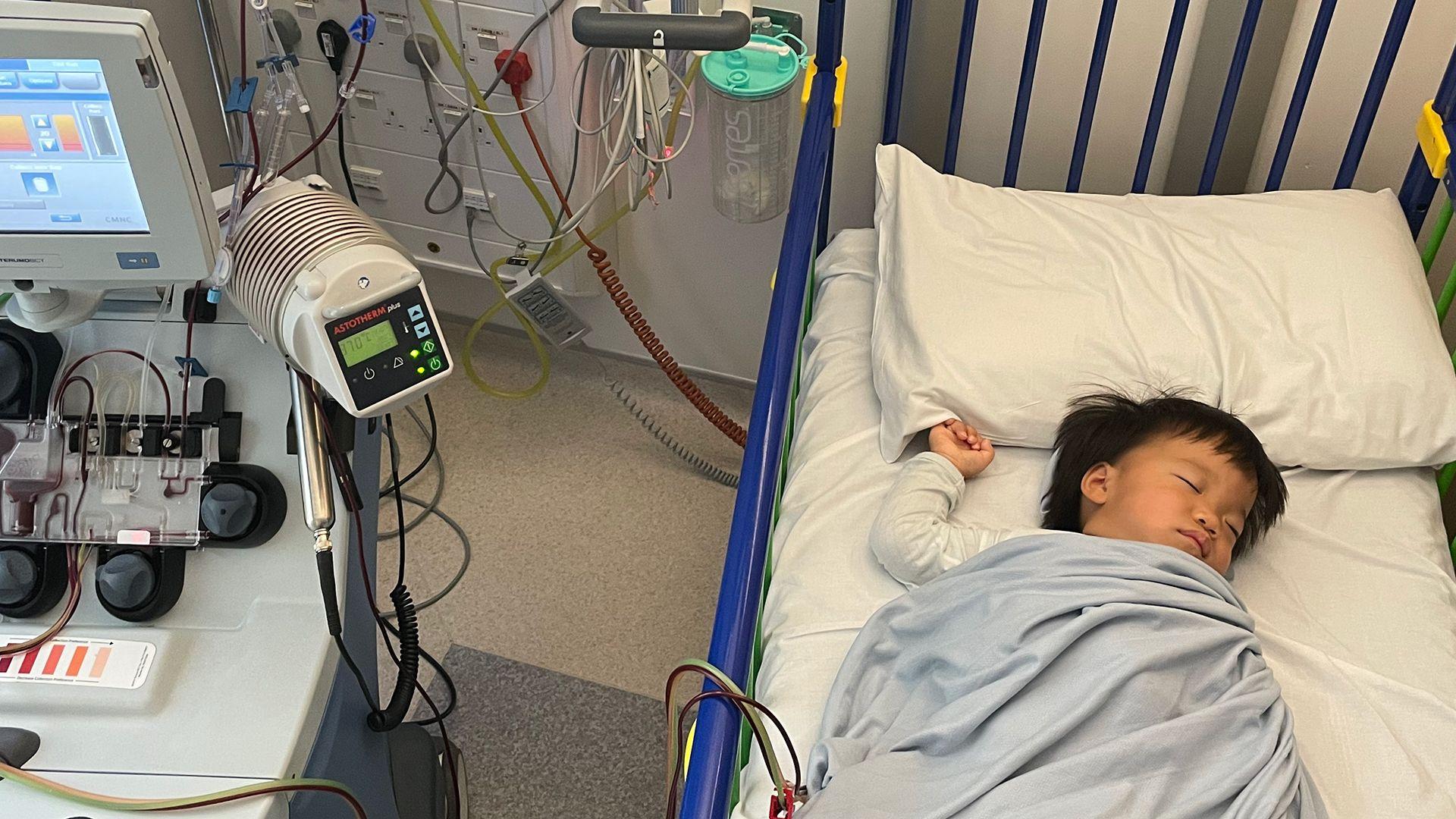
Until now, the only medicine available for Hunter syndrome was Elaprase, which costs around £300,000 per patient, per year and can slow the physical effects of the disease. The drug is unable to cross the blood-brain barrier and so does not help with cognitive symptoms. But today, Oliver is being hooked up to a machine and having some of his cells removed - the first crucial step in trying to halt his genetic disorder in this one-off treatment.

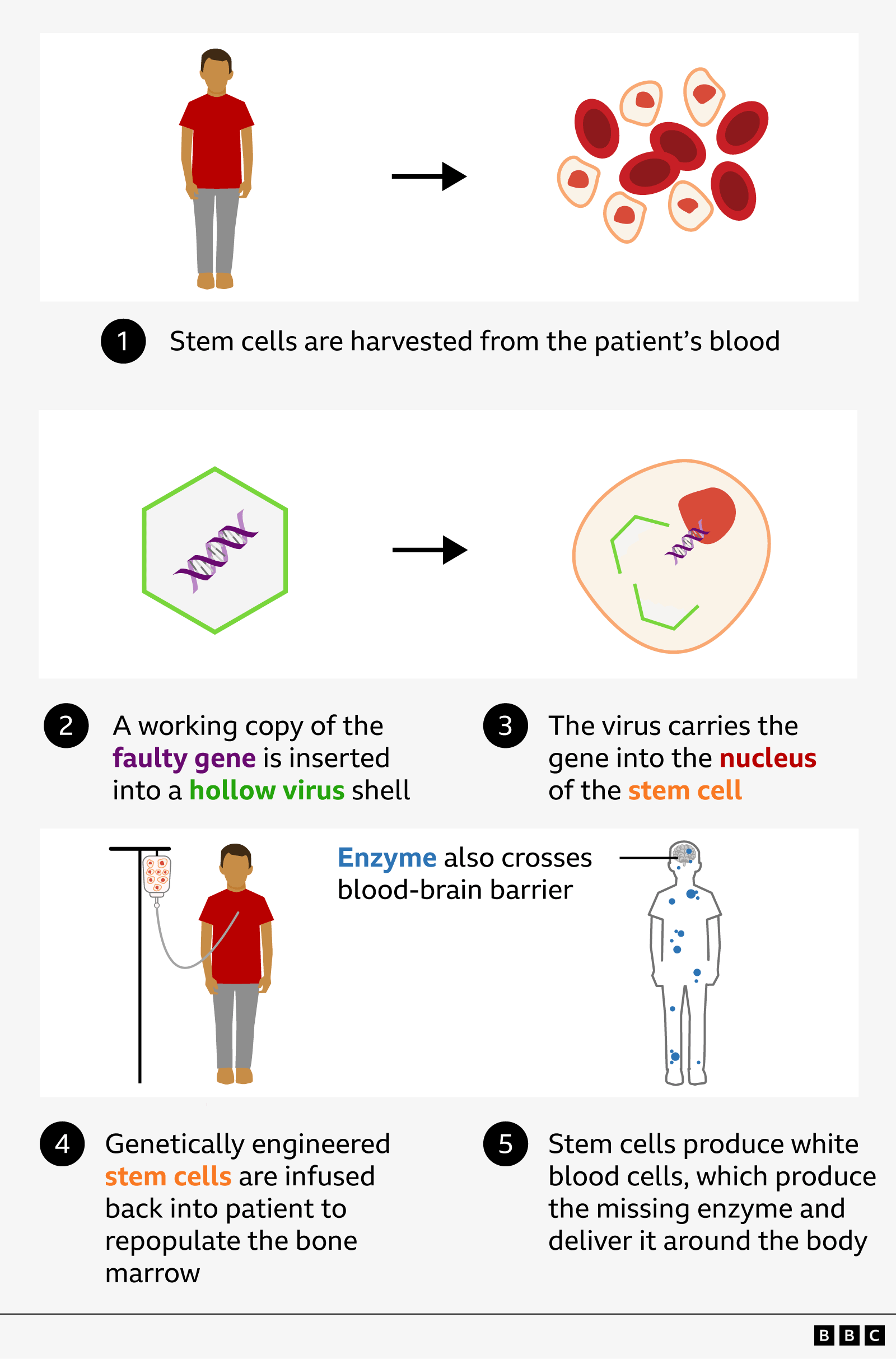
"His blood is being passed through a fancy machine that is collecting a specific type of cell called stem cells which will be sent to a lab to be modified and then given back to him," Dr Claire Horgan, consultant paediatric haematologist explains.

Oliver's cells are tweaked

Oliver's cells are carefully packaged and sent to a laboratory at Great Ormond Street Hospital (GOSH) in London. In Hunter syndrome, a genetic error means that cells are missing the instructions for making an enzyme, iduronate-2-sulfatase (IDS), essential for breaking down large sugar molecules which over time accumulate in tissues and organs.

Scientists insert the missing IDS gene into a virus, which has its genetic material removed so that it can't cause disease. A similar method has been used in other gene therapies, such as the treatment for another rare inherited condition, MLD. Dr Karen Buckland, from the Cell and Gene Therapy Service at GOSH, explains: "We use the machinery from the virus to insert a working copy of the faulty gene into each of the stem cells. When those go back to Oliver, they should repopulate his bone marrow and start to produce new white blood cells and each of these will hopefully start to produce the missing protein [enzyme] in his body."

There still remains the issue of how to get enough of the missing enzyme into the brain. To overcome this, the inserted gene is modified so that the enzyme it produces crosses the blood-brain barrier more efficiently.

Infusion day - February 2025

We next meet Oliver back at the clinical research facility at Royal Manchester Children's Hospital. This time he's with his mum Jingru, while Ricky has stayed in California to look after Skyler. There is a sense of anticipation as a member of the research team opens a large a metal cryopreservation tank where Oliver's gene edited stem cells are frozen, having been transported back from GOSH.

A small, clear infusion bag is removed and slowly brought to body temperature in a tray of liquid. After multiple checks, a nurse draws the clear fluid containing around 125 million gene-modified stem cells, into a syringe. Oliver is used to hospitals, but is fretful, and wriggles as the research nurse slowly injects the treatment, about a cup full, into a catheter in his chest. Jingru holds Oliver steady in her arms. After 10 minutes, the infusion is done. An hour later, a second, identical infusion is made. Oliver continues to watch cartoons on a portable screen, oblivious to the potential importance of what's just happened.

And that's it. The gene therapy is complete. It seems to be all over rather quickly, yet the ambition here is huge: to stop Oliver's progressive disease in its tracks, in a one-off treatment. After a couple of days, Oliver and Jingru fly back to California. Now the family, and the medical team must wait to see if the gene therapy has worked.

Early signs of progress - May 2025

In May, Oliver is back in Manchester for crucial tests to see if the gene therapy is working. This time the whole family is here. We meet in a park in central Manchester and it's immediately clear that things are looking good. Oliver is more mobile and inquisitive than I've seen him. Admittedly, he now has the freedom to play and is out of hospital, but he appears brighter and healthier.

Ricky is thrilled: "He's doing really well. We have seen him progressing in his speech, and mobility. In just three months he has matured." The really big news is that Oliver has been able to come off the weekly infusion of the missing enzyme. "I want to pinch myself every time I tell people that Oliver is making his own enzymes," says Jingru. "Every time we talk about it I want to cry because it's just so amazing." She tells me he is "so different" from before the treatment, is talking "a ton" and is engaging more with other children.

It is lovely to finally meet five-year-old Skyler who is very protective and caring towards his younger brother. "My wish upon the star is for Skyler, to be able to get the same treatment," says Ricky. "It feels like Oliver has got a reset in his life, and I want the same thing for Skyler, even though he's a bit older." Initially it was thought that Oliver was too old for the trial, as the treatment cannot reverse existing damage, but tests showed he was still largely unaffected. Skyler seems to take delight in the world around him, and is keen to hold my hand and chat as we walk to the park.

Ricky explains that Skyler has delayed development in speech and motor skills, but is undergoing infusion therapy, which gets the treatment to his body, but not his brain.

'Eternally grateful'

Oliver returns to Manchester every three months for a few days of follow-up tests. In late August, further checks confirm the gene therapy is working. Oliver is clearly thriving, and to date is now nine months post treatment. Prof Jones, whom Oliver calls Santa because of his white beard, is beaming: "Before the transplant Ollie didn't make any enzyme at all and now he's making hundreds of times the normal amount. But more importantly, we can see he's improving, he's learning, he's got new words and new skills and he's moving around much more easily."

However, Prof Jones exercises a degree of caution: "We need to be careful and not get carried away in the excitement of all this, but things are as good as they could be at this point in time." On the rooftop garden at the hospital, Oliver plays with his dad. "He's like a completely different child. He's running around everywhere, he won't stop talking," says Ricky. "The future for Ollie seems very bright and hopefully this means more kids will get the treatment."

In all, five boys have been signed up for the trial, from the US, Europe and Australia. None are from the UK as patients here were diagnosed too late to qualify. All the boys will be monitored for at least two years. If the trial is deemed a success, the hospital and university hope to partner with another biotech firm in order to get the treatment licensed. Prof Jones says the same gene therapy approach is being applied to other gene disorders.

There are similar treatments on trial in Manchester for MPS type 1 or Hurler syndrome and MPS type 3 or Sanfilippo syndrome. Ricky and Jingru say they are "eternally grateful" to the Manchester team for allowing Oliver to join the trial. They say they are astonished by his progress in recent months. Oliver's now producing the missing enzyme and his body and brain are healthy.

"I don't want to jinx it, but I feel like it's gone very, very well," says Ricky. "His life is no longer dominated by needles and hospital visits. His speech, agility and cognitive development have all got dramatically better. It's not just a slow, gradual curve as he gets older, it has shot up exponentially since the transplant."

The trial that almost never was

Researchers at the University of Manchester led by Prof Brian Bigger had spent more than 15 years working on creating the gene therapy for Hunter syndrome. In 2020 the university announced a partnership with a small US biotech company Avrobio, to conduct a clinical trial. But three years later the company handed back the licence to the university, following poor results from another gene therapy study and a lack of funds. The first-in-human trial, which would soon help Oliver, was in jeopardy before it had even begun.

Prof Jones: "We had to move very quickly to try to save the whole idea and find another sponsor and another source of funding." It was then that British charity, LifeArc, stepped in, providing £2.5m of funding. CEO Dr Sam Barrell said: "A huge challenge for the more than 3.5 million people in the UK living with rare conditions, is getting access to effective treatments – currently 95% of conditions have none. "The Chu family are relieved the trial didn't come to a halt and now hope Skyler may one day benefit from the same gene therapy as his brother. "I would walk to the end of the earth, backwards, forwards, upside down, barefoot, to make sure my kids have a better future," says Ricky.

22 Winter Dinners for a Healthy Gut and Weight Loss

22 Winter Dinners for a Healthy Gut and Weight Loss


Winter is the perfect time to cozy up with hearty, nourishing meals that support your overall well-being. These recipes are designed to bring warmth and comfort while also promoting gut health and digestion. They feature ingredients like garlic, mushrooms, and beans, which are known for their beneficial effects on the digestive system. Each dish contains at least 6 grams of fiber and/or 15 grams of protein, and is under 575 calories per serving. This makes them ideal choices for those looking to maintain a healthy weight or simply enjoy satisfying, light meals during the colder months.

Creamy Spaghetti with Brussels Sprouts


This one-pan dish starts with pasta that simmers in broth, creating a rich, starchy base. It’s then coated in a creamy Asiago sauce with a hint of red pepper for a subtle kick. The addition of caramelized Brussels sprouts and shallots brings a sweet, earthy depth, while fresh basil adds a bright finish. It’s a simple yet flavorful meal that’s perfect for a busy weeknight when you’re craving something comforting.

White Bean Skillet


A savory blend of sweet onions, tomatoes, and garlic forms the foundation of this dish. Creamy white beans are added for a hearty texture, and a handful of spinach brings freshness and color. A sprinkle of Parmesan cheese ties everything together with a salty richness. Served with toasted whole-wheat baguette slices for dipping, it’s a quick and satisfying dinner that’s great for both weeknights and weekend suppers.

Lemon-Turmeric Cabbage & White Bean Soup


This soup combines tender cabbage and creamy cannellini beans with aromatic spices like turmeric and lemon. The tangy brightness of lemon juice lifts every spoonful, making it a light but deeply satisfying dish. It’s an easy recipe that’s perfect for a cozy weeknight meal.

Chickpea Casserole with Spinach & Feta


This casserole blends tender spinach, chickpeas, and brown rice with a touch of cream cheese and tangy feta. Fresh dill, nutmeg, and lemon juice add layers of flavor, while a hint of red pepper introduces gentle heat. Baked until bubbly and topped with lemon zest, it’s a comforting and vibrant dish that’s sure to please.

Marry Me White Bean Soup


Inspired by the flavors of Marry Me Chicken, this vegetarian soup features sun-dried tomatoes, garlic, cream, and Parmesan. It’s finished with fresh basil and extra cheese, creating a rich, soul-warming dish that’s crowd-pleasing and perfect for gatherings.

Broccoli-Cheddar Butter Beans


This dish offers the creamy, cheesy goodness of broccoli-Cheddar soup in a convenient skillet form. Tender butter beans provide a creamy texture and plant-based protein, while broccoli florets add color. Sharp Cheddar cheese melts in for that classic flavor, making it a filling main course.

Butternut Squash & Black Bean Enchilada Skillet


Tender cubes of butternut squash and hearty black beans simmer in green enchilada sauce, with tortilla strips stirred in for added texture. A layer of melted cheese ties everything together, creating a satisfying, vegetarian-friendly dish that’s easy to prepare.

Creamy Chickpea Soup


This quick and easy soup comes together in just 20 minutes. Cream cheese adds a velvety texture, while cilantro and crunchy tortilla strips provide a refreshing contrast. It’s a one-pot meal that’s perfect for busy weeknights and can be enjoyed by the whole family.

Spanakopita-Inspired Skillet Beans


These skillet beans draw inspiration from spanakopita, the Greek spinach pie. Cannellini beans add protein and fiber, while fresh dill, parsley, and a squeeze of lemon provide a bright, herbaceous finish. It’s a creamy, comforting dish that’s great for any season.

High-Fiber Vegetable Stew


This vegetable stew is a cozy dish for two, made with late-summer and early-fall produce. Simmered with warm spices and a savory broth, it’s delicious served with warm naan on the side for dipping. It’s a perfect way to celebrate seasonal flavors.

High-Protein Chicken & Sweet Potato Enchilada Skillet


This one-pan meal is ideal for busy weeknights. Tender chunks of sweet potato and shredded chicken combine with store-bought enchilada sauce for a flavorful shortcut. It’s a hearty, satisfying dish that’s easy to make and packed with nutrients.

High-Protein Spaghetti Squash Caprese


This fun twist on the classic Italian salad combines traditional caprese ingredients with roasted spaghetti squash. The squash is tossed with juicy plum tomatoes, creamy mozzarella, fragrant fresh basil, and great northern beans for a boost of plant-based protein. A drizzle of balsamic glaze ties the dish together with a sweet-tangy finish.

Chicken Guacamole Bowls


Juicy chicken thighs and colorful veggies are served over a fresh and creamy guacamole with a sprinkle of tangy cotija cheese. A squeeze of lime at the end brightens up the dish and ties all the bold, fresh flavors together.

Marry Me White Bean Salad


This salad is a bright, flavor-packed dish that’s hard not to fall for. Inspired by Marry Me Chicken, the tender white beans are tossed with sun-dried tomatoes, fresh basil, and a creamy dressing that soaks into every bite. It’s quick to throw together and perfect for meal prep, picnics, or pairing with grilled meats.

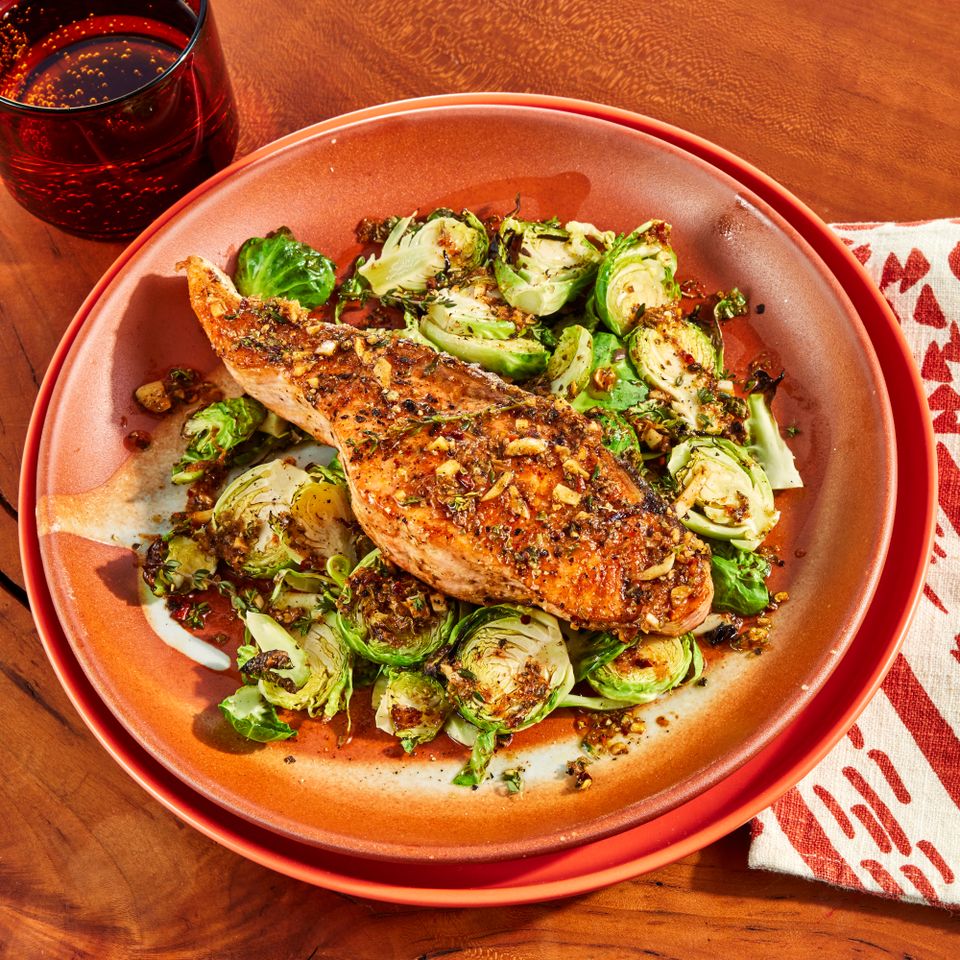
Sheet-Pan Salmon and Shaved Brussels Sprouts with Lemon-Garlic Drizzle


Heart-healthy salmon is nestled among shaved Brussels sprouts, both of which soak up amazing flavor from the double drizzle of lemon-garlic sauce. It’s a simple yet elegant dish that’s perfect for a weeknight dinner.

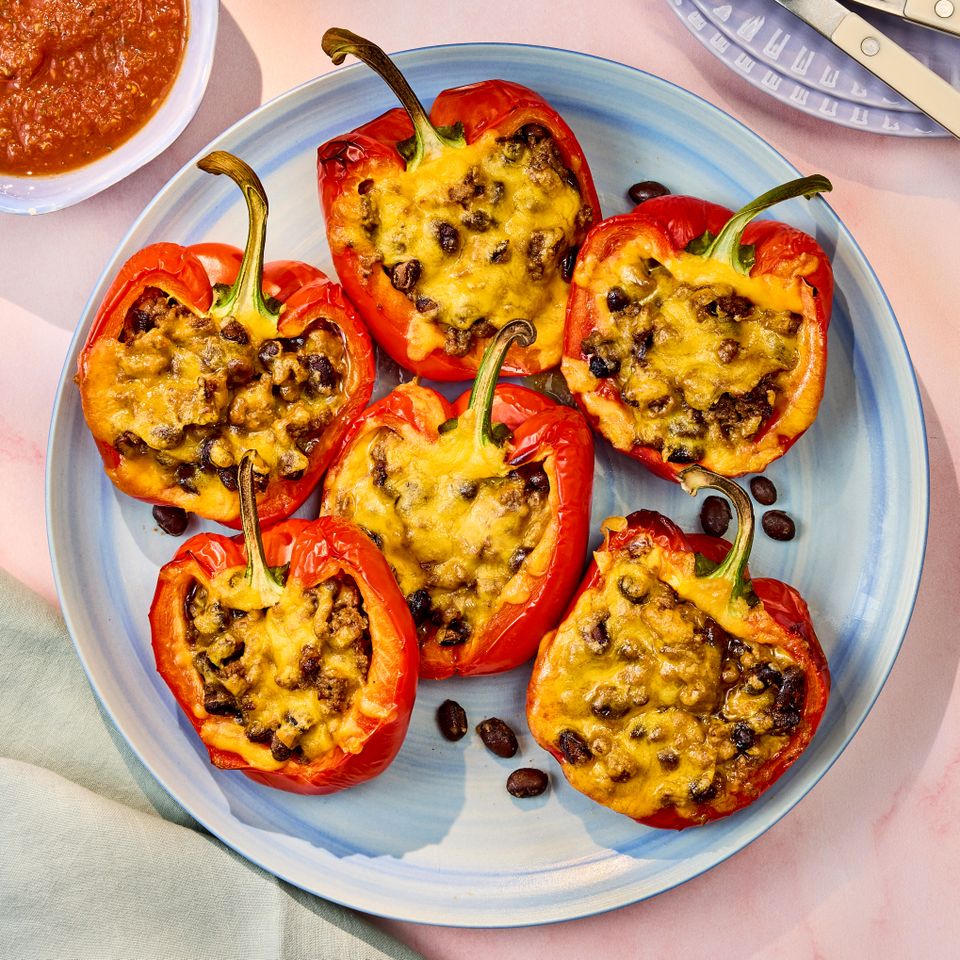
5-Ingredient Taco Stuffed Peppers


These five-ingredient stuffed peppers are a simple, satisfying twist on taco night with all the flavors you love. Sweet bell peppers act as the perfect vessel for a filling of lean ground beef, black beans, salsa, and melty cheese. Serve them with a dollop of sour cream, sliced avocado, and/or fresh cilantro for a little extra flair.

Spaghetti with Mushrooms, Spinach & Ricotta


Earthy mushrooms, spinach, and garlic flavor the pasta alongside whole-milk ricotta that creates a creamy sauce. You can elevate the flavor even more by using wild mushrooms for a deeper savory flavor and finishing with a squeeze of lemon to brighten everything up.

Roasted Veggies with Halloumi & Chickpeas


This sheet-pan recipe is perfect for a weeknight dinner with easy cleanup. Chickpeas and halloumi provide protein to make this dish filling and satisfying. Roasting everything on the same sheet pan creates crispy, caramelized bites that meld beautifully with the creamy yogurt spread underneath.

Sheet-Pan Chicken Thighs with Red Cabbage & Sweet Potatoes


The beauty of this dish lies in its simplicity—everything cooks together on one sheet pan, making cleanup a breeze. As the ingredients roast together, the chicken juices meld with the vegetables, creating a savory dinner.

Spinach & Artichoke–Stuffed Butternut Squash


Tender roasted butternut squash halves are filled with a cheesy spinach-and-artichoke mixture. A sprinkle of crushed red pepper adds heat, and a drizzle of balsamic glaze adds a tangy-sweet flavor contrast that ties it all together.

Saag Aloo Matar


This cozy one-skillet dinner draws inspiration from two Indian dishes: saag aloo and aloo matar. It’s packed with plenty of vegetables, including leafy greens, potatoes, and peas, all simmered in an aromatic tomato-based sauce.

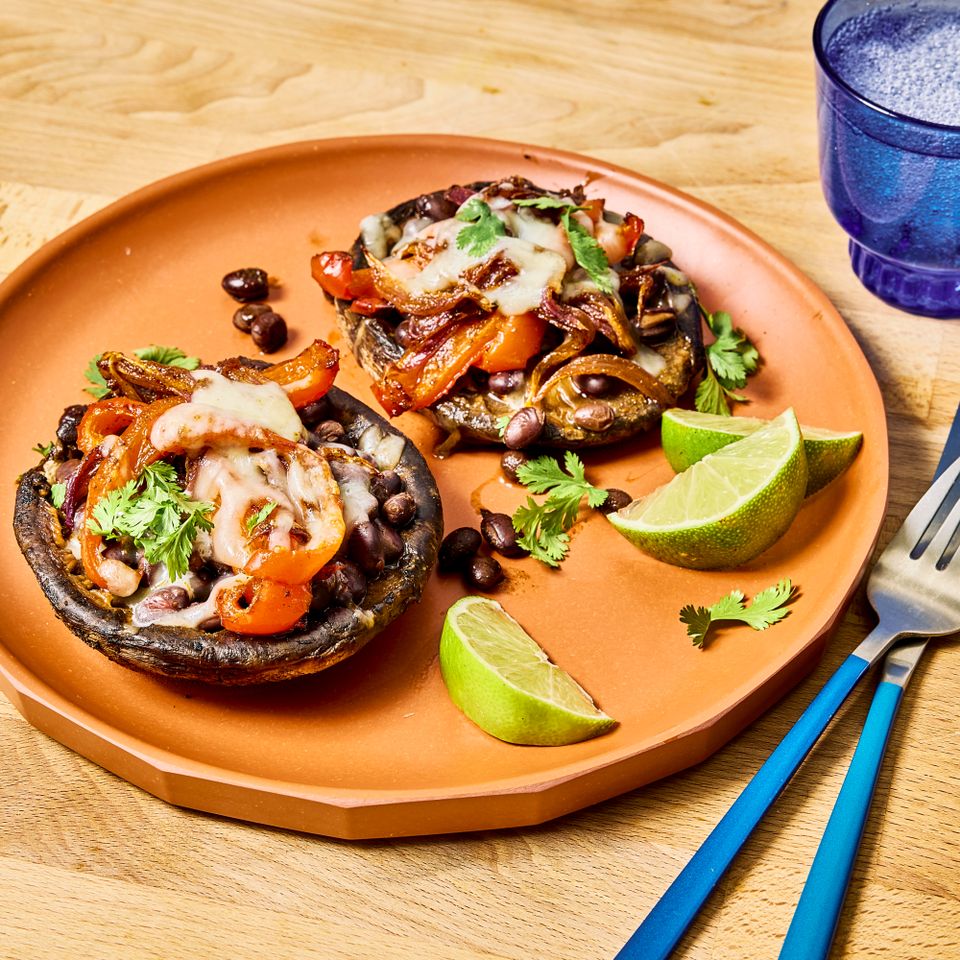
Fajita-Stuffed Mushrooms


This flavorful vegetarian dish fills roasted portobello mushroom caps with fajita-style veggies and black beans, giving them a boost of fiber and protein. Top it off with melted cheese and strained (Greek-style) yogurt for a satisfying dinner.